





































Members of the Latin School Union (LSU) are currently bargaining to create a new contract for Latin faculty for the next four years. The bargaining committee has been meeting regularly with administrators since November to develop this document, the second since the founding of the LSU.
The union’s first contract was ratified four years ago after the initial formation of the union in 2021. This contract expires on June 30, creating an imminent deadline for the bargaining process.
“The year before the end of the contract, you start negotiating again,” Latin language teacher and LSU President Elissabeth Legendre explained. “And [you] look at what you have and then determine what your priorities [are] and what needs to change, what could stay the same.”
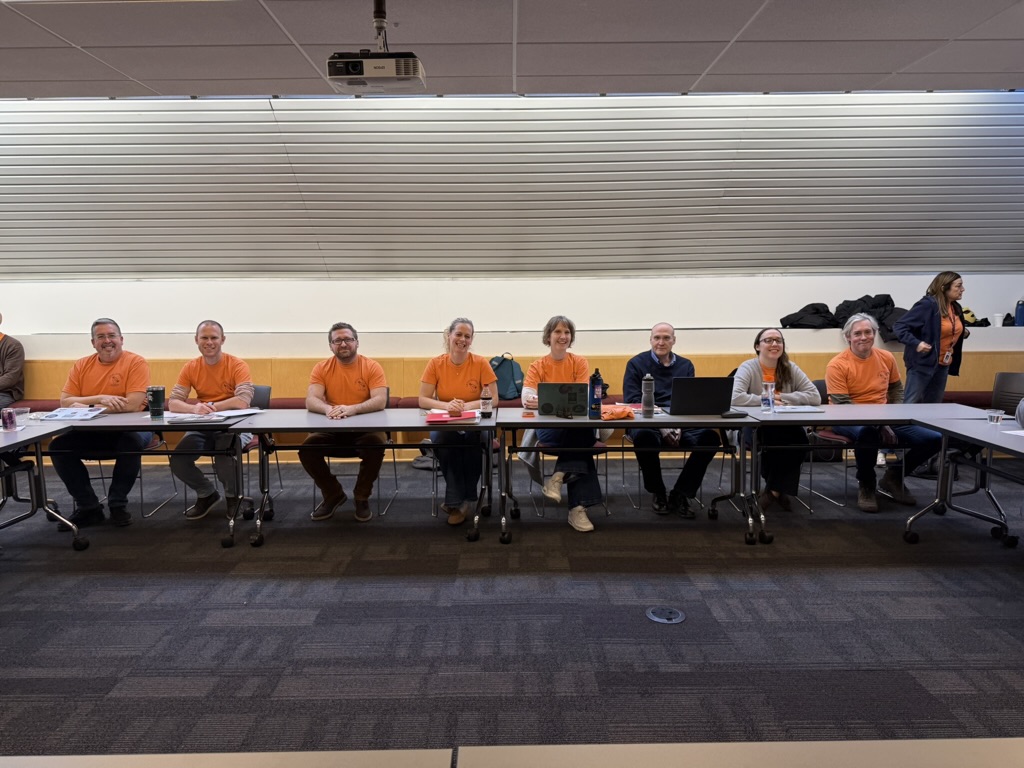
To coordinate this reevaluation, representatives from the administration and the Board of Trustees meet with the bargaining committee—composed of over 15 union members—on Wednesday afternoons after school hours. Additionally, since the announcement of Head of School Thomas Hagerman’s resignation, effective at the end of the current school year, Latin’s Board of Trustees has become even more involved with the bargaining effort to ensure continuity.
“We’re in the process right now of trading proposals to then hopefully have a new contract that starts July 1,” Ms. Legendre said.
The deadline, though months away, approaches fast at the bargaining table as all parties try to compromise on a contract. “Sometimes it doesn’t happen in one session,” Lower School teacher and bargaining committee member Carrie Smey said. “Sometimes there has to be an in-between where [the administration] can talk about it with their team, and we can talk about it with ours.”
The careful consideration of each clause shapes a contract that best supports Latin’s overall mission of a rigorous and innovative education. Director of Human Resources Susan Bolon, speaking on behalf of the administration, said, “Ultimately, bargaining is not just about individual proposals—it’s about strengthening the working relationship and reaching agreements that support the organization, especially our students, and our employees over the long term.”
On the union side, drafting proposals began last year, with bargaining committee members meeting for two hours each week.
“We spent a lot of time last year preparing proposals,” Upper School science teacher and bargaining committee member Jonty Faulkner said. “We surveyed; we had several listening sessions with our constituents—with our members—about what our faculty were feeling needed to be addressed in this next contract.”
As they drafted their proposals, the LSU honed in on the teacher evaluation process and workload equity as two of their highest priorities.
To address the former topic, bargaining committee members spent last year gathering feedback from department chairs and reconceptualizing the evaluation process, largely from scratch. “We know as teachers that it is so important for kids to get feedback to grow and to improve, and the same is true for teachers,” Middle School Language Arts Department Chair and LSU Vice President Whitney Gorton said.
Under the current policy, new teachers could go until May of their first year without receiving feedback on their performance. Ms. Legendre described how the bargaining committee worked to remedy this challenge. “We put forth proposals that allow the Employer [administrators] and actually require the Employer to be in classrooms of new teachers much more often than they are right now,” she said.
In keeping with their priority of equity, the LSU also put forward proposals aimed at ensuring balance for faculty in all divisions and departments. “Another priority is the workload proposal: getting equity for performing arts and PE teachers, feeling like there’s a little bit more that we could do in our Lower School to help make sure that their workload is really sustainable,” Ms. Legendre said.
The administration similarly attempts to enter each bargaining session with clear priorities. “Latin’s School’s goals include maintaining a fair and respectful workplace while also ensuring financial responsibility and stability for the future,” Ms. Bolon said. “We aim to reach agreements that support students and employees, provide clarity and consistency, and allow Latin to continue serving its students, teachers, and community effectively.”
Ms. Bolon described the presence of the administration at the bargaining table. “As administrators, our role is to represent the institution at the bargaining table, carry out negotiations in good faith, and ensure that discussions align with the organization’s mission, operational needs, and long-term sustainability,” she said.
Yet the bargaining process is not always without conflict—union members and administrators must work through points of contention before they can create a contract that satisfies both sides. Near the beginning of this year’s bargaining process, for example, proposals from administrators to implement a no-strike clause and shift the responsibility of fee collection to union leaders left the bargaining committee disappointed. “Members were taken aback by the tone and content of these proposals,” the LSU wrote in a December newsletter to their mailing list.
However, at a January meeting, the administration delivered a swift withdrawal of these suggestions, embodying the collaboration and flexibility necessary on both sides to ultimately reach an agreement.
“I was really pleased when the Employer started by retracting two of their most egregious anti-union proposals,” Ms. Legendre said. “I’m really cautiously optimistic that going forward, we’re going to have a lot of movement quickly to get this amazing contract done before summer.”
With just under three months left until the June 30 deadline and recent administrative proposals that left compensation details forthcoming, though, the LSU is beginning to lose confidence in this reset.
“We need more than aspirations; we need an affirmative commitment to action from the Employer,” a union newsletter in March said. “Only then can we cross the finish line of these negotiations together.”