



It’s no secret that attending a school like Latin is a privilege. At a school where students get to immerse themselves in a diverse selection of classes, have one-on-one meetings with teachers, and engage in extracurricular educational experiences, students should feel pressure to take advantage of it all.
Even if the school or families do not intentionally pressure students, I know many, myself included, internalize and understand their privilege, putting expectations on themselves accordingly. We understand the sacrifices their families have made to send their children to a school with as many opportunities as Latin, and students feel the need to live up to the educational investment that Latin provides.
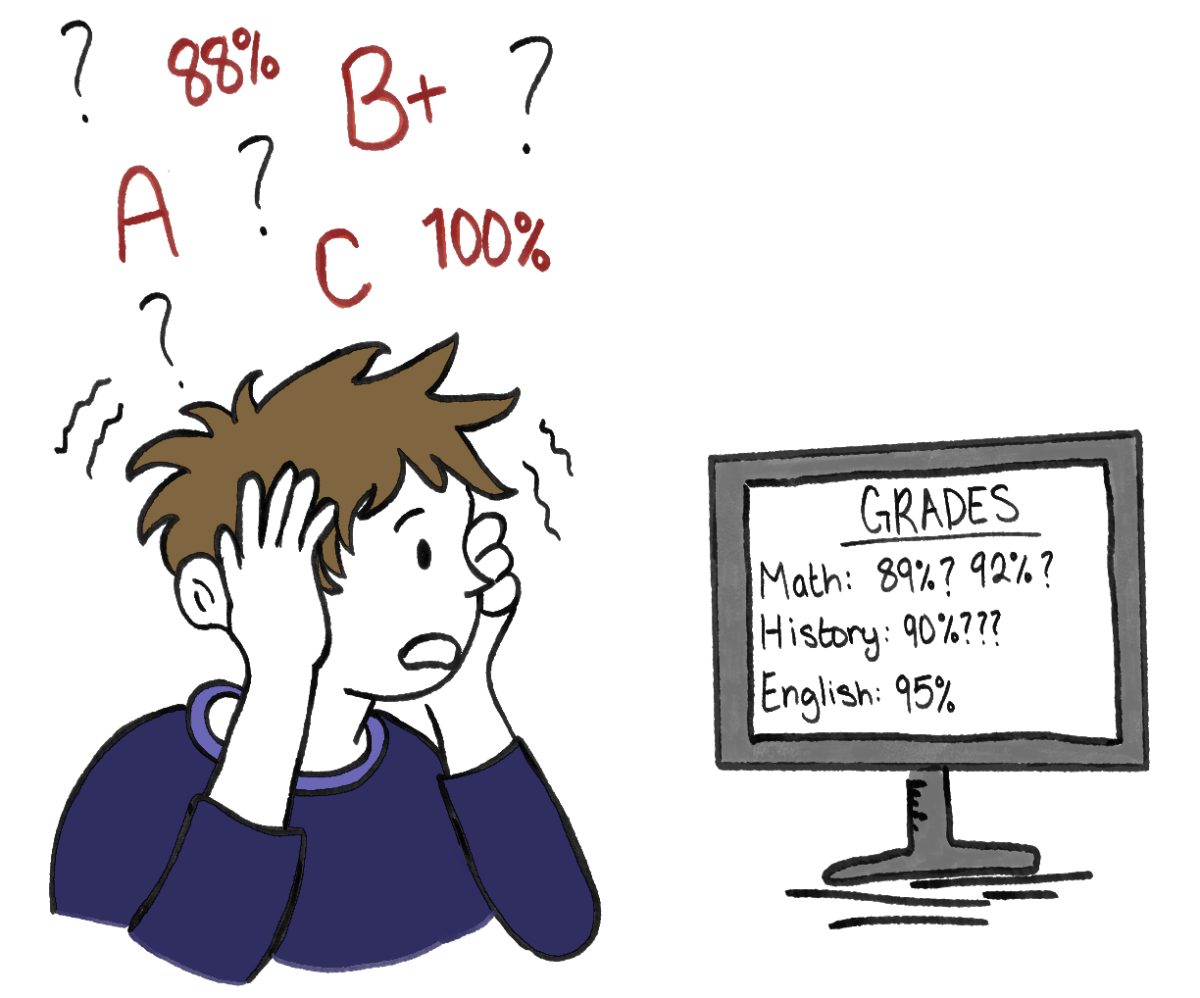
These internal expectations lead students to become transactional learners, where they crave tangible affirmations that, despite the pressure, they can achieve academic success at a high level. Transactional learning—learning for the purpose of achieving a high grade—is neither pointless nor evil: it is a logical step for most high school students who simply want to attend their dream college or make their families proud.
Since transactional learning prioritizes short-term grades over long-term intellectual development, it seems, at first glance, a solid way to achieve academic success. After all, when college admissions officers look at a student’s transcript, they generally only judge students on their final grade, not how much effort they put in or how much content they learned. Learning for a grade is, therefore, not an unreasonable choice given the competitive nature of higher education.
Another element that contributes to transactional learning is the fact that, for the most part, students are stuck in an academic assembly line, taking them through subjects they may not find interesting. Granted, Latin does a better job than most high schools of giving students class choices within a particular subject, but most students naturally have academic areas in which they have little interest. There is value in making the most of a bad situation, but students in these classes feel more trapped than anything else. They can either prioritize getting a good grade or choose the “moral” alternative of learning for the sake of understanding, even when it comes at the expense of a bad grade.
Even though it may be possible for some students to prioritize both, the vast majority of students—between familial responsibilities, extracurriculars, and maintaining a social life—simply do not have time to choose the “moral” alternative.
But the “choice” that students have falls apart when they realize that college admissions officers differentiate students based on grades. It is completely unfair to simultaneously use grades as a metric to determine students’ futures, and then expect learners not to care about them entirely.
So how can we get students to detach themselves from grades and instead focus on retaining valuable liberal arts skills that will transfer to the rest of their lives?
The answer lies in what grades should represent. As it stands, in most classes, grades are calculated through some combination of averaging tests, quizzes, and graded homework assignments.
In a perfect world, these metrics would measure how well students can learn an assigned topic. But in actuality, the ability to score well on assessments is an entirely different skill. Test scores are linked to a multitude of factors beyond academic skills; these include sleep, family issues, how many friends a student has in a class, and many other components beyond comprehension of the class material.
Instead of measuring a student’s ability to learn a topic and using that to judge their academic skills, schools should find alternative ways to measure student performance.
One idea is replacing the system of having a big test every few weeks with small assessments every few days. This system would take pressure off of students to perform well on every assessment, and allow them to take academic risks without fear of their grade dropping.
But no matter how much schools tweak grading systems, the truth is that ultimately, grades’ main purpose is to differentiate students in the eyes of colleges. And as long as grades serve to separate students in their pursuit of higher-level education, transactional learning will persist.
In the meantime, people need to stop looking at transactional learning as cheating the school system, and instead, they must recognize that it is a logical response for students who understand that grades differentiate them in the eyes of colleges. It’s time to stop looking down upon students who recognize the obvious, and it’s time to think of a better way to judge students.







Francis "Mr. Nonchallant" Reh • Jun 2, 2026 at 3:12 pm
Ben, this is an incredible article. You have such a beautiful voice and tone. Everyday I am grateful I get to hear your positive and uplifting voice in the locker bay. Rain method!