


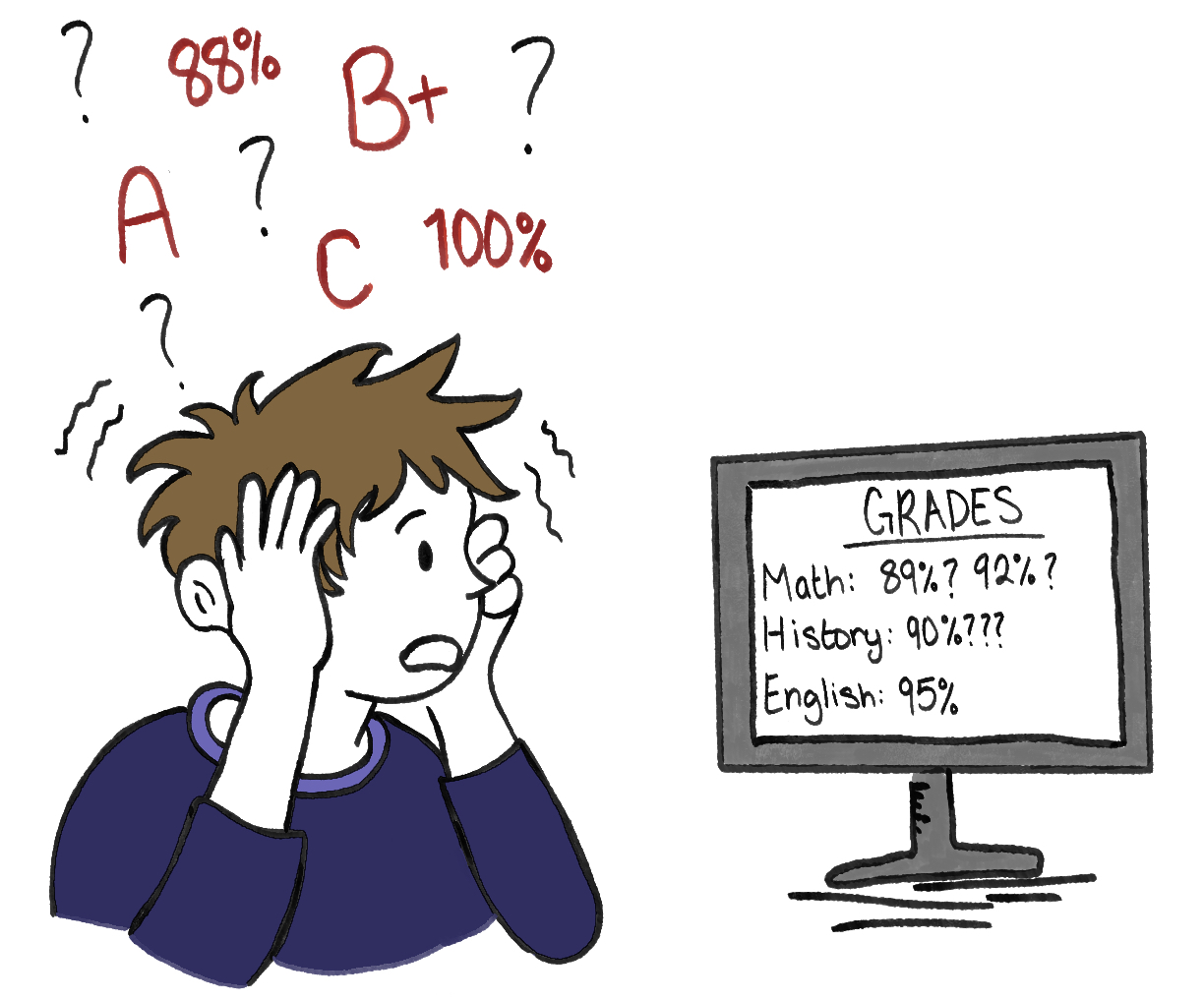
As Latin implements its new GPA policy, students are worrying about their grades more than ever. Under the current system, teachers decide how—and whether—to accessibly display grades, often leaving students feeling uncertain about their performance in class. It’s time to create a centralized grading portal so students can access their grades at all times, not just on their report cards.
The days leading up to grade reports send students into a flurry as they scour their assignments and reach out to teachers to calculate their final grades. Why should one of the leading high schools in the city make accessing grades so difficult for students, especially when similar schools, like Francis W. Parker and New Trier, have created centralized gradebooks?
While students can view their scores in some classes, the wide range of grading practices across departments (and even within them) means students need to check multiple platforms to access their grades—if they can see their standing at all. For classes where students are unable to view their grades, they must either create a grade book of their own or constantly ask their teachers to know their scores.
This year, the English Department developed a spreadsheet to combat this issue by sharing students’ scores and overall grades at all times. The change has given students more agency in their learning, allowing them to make changes to their habits based on prior feedback. This change, however, has not been adopted schoolwide. In science, for example, some teachers still block students from viewing their grade averages, fueling frustration among the student body over grading discrepancies.
This patchwork policy isn’t the answer. As a school that prides itself on its academic rigor and student-teacher transparency, we should implement a portal that lets students access their grades and see exactly where they need to improve.
Although teachers would have to upload grades more frequently, ultimately this platform would reduce the stress placed on teachers that comes with approaching grade reports, when families tend to pester them about their child’s standings. Additionally, a centralized platform would allow kids to practice the independence and self-advocacy that Latin preaches, promote stronger student-teacher relationships, and limit parent-teacher confrontations over grade communications.
After all, knowledge is power.
Although some opponents argue that allowing students to see their grades at all times would intensify Latin’s already competitive environment, this obsession already exists, just in a more disorganized and anxiety-inducing way. Latin’s current approach to grading—attempting to deemphasize grades’ significance by making access to them confusing and complicated—ignores the root of the problem. Stress culture already exists. Instead of trying to force a false sense of unimportance on grades, Latin should recognize this anxiety and remedy it by showing them their grades instead of hiding them.
If Latin constructed a centralized system that displays all grades in one place, it would reduce grade ambiguity and give Latin students the same level of support other high-achieving schools offer.
This portal could mirror systems already in use. Chicago Public Schools (CPS) use Aspen, a website where students can view their percentages and letter grades, as well as their weighted and unweighted GPAs, at any time, providing maximum clarity for students, teachers, and parents.
Similar to CPS, New Trier High School uses a platform called Parent-Teacher Pro, which syncs grades from Canvas. Using a portal similar to Parent-Teacher Pro could be especially appealing for Latin, since many teachers already use Canvas to display grades.
And it’s not just public schools that implement this proposed structure. Even Francis W. Parker has a “Parker Portal” where students can see their grades for each class on one central website.
Let’s not have a worse system than Parker.
While these systems vary, they are all localized on one platform, and all offer consistency and transparency around grades It will take time for Latin to develop a similar platform, so we have to act now. It’s time to start working towards this fairness for students.
Providing students with full access to their grades isn’t just convenient; it is essential for accountability, student-teacher transparency, and student growth. Grades determine GPA, which influences their confidence, college trajectory, and future opportunities. Students deserve to know their grades, and by committing to a single, transparent grading platform, Latin can better meet students where they are. We need to stop concealing grades. Now is the time to give them the autonomy they crave and the tools they need to excel.






Joseph Sweeney • May 28, 2026 at 8:44 am
I had to check the date after reading this editorial. 2026?
This issue was resolved at most independent schools decades ago.
Students (and their parents) deserve a single portal to review course expectations, syllabi, assignments, grades, and written feedback. Centralized systems increase faculty accountability. They improve oversight and help enforce school norms.
I agree with your reasonable position and commend you on your persuasive writing.
Best,
Dr. Joe