

















The AP World Language final exam will switch to a completely online test for the 2026-27 school year, accompanied by a pivot from the graded conversation to a project presentation. The College Board announced the transition last year. The new exam will grant AP language students two extra weeks of preparation versus the current four minutes of preparation, raising concerns about a less accurate test of fluency and possible academic dishonesty.
The structure of the AP Language final exam is determined by the College Board, which recently announced the switch to a virtual exam in an attempt to streamline the testing process. Language testing was the last AP exam to make this switch, as it currently is the only AP test still conducted completely on paper.
However, language teachers, in opposition to this shift, argue that the current online format is necessary for language tests. Opponents of the change also take issue with the transition from a graded conversation to a presentation project because of the increased preparation time, arguing that students will rely on recitation rather than improvised vocabulary.
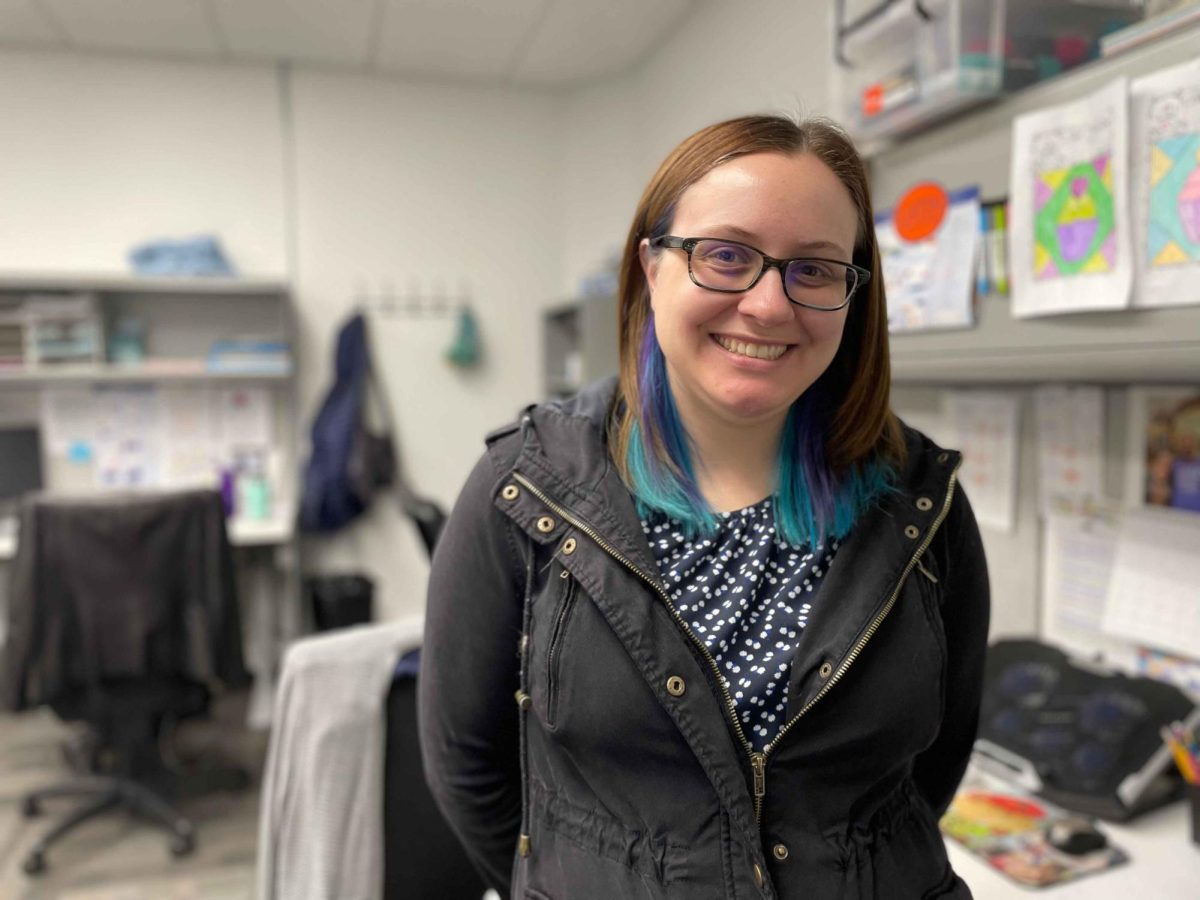
In agreement with many other AP language teachers, Upper School AP Spanish teacher Alma Preciado challenges the effectiveness of the new presentation project.
“That takes away the authentic nature of it,” Ms. Preciado said. “That takes away the spontaneity of how you would speak in real life. In real life, you're not going to have a month to prepare your script.”
Many students, however, feel the improvisation required by graded conversations
hinders their performance. Sophomore Claire Horwitz plans on taking AP Spanish next year and expressed her support for the new testing system.
“My performance would definitely be better having two weeks to prepare because I normally am the type of person that likes preparation and doesn't really like doing things on the spot,” Claire said. “Making sure that I could prepare and know what I'm going to say beforehand would definitely calm my nerves.”
While many students might find comfort in the new system, Ms. Preciado fears that seeking that comfort might hold students back from fluency.
“If the purpose is proficiency, and the purpose for me as a teacher is to prepare kids with the tools they need to be able to do this on the fly, having that extra time to prepare will allow kids to not really push themselves as hard as they would,” Ms. Preciado said.
Ms. Prediado’s concerns extend further than a decreased student effort. She worries about students “using AI to essentially produce a script that they can memorize.” The difficulty with preparing for this possibility is that teachers “don't know how the graders or the people who read the exams on the College Board will be able to determine what was produced authentically.”
The lack of information surrounding the College Board’s strategies encompasses more than just concerns about cheating. Teachers have not yet learned about the specifics of the policies that the College Board plans to implement. The lack of disclosure about these new policies poses concerns for teachers who are unsure how to adapt their teaching methods and approaches to prepare their students for the test.
“How does an educator then shift the way they teach to match this new platform and this new way of testing?” Ms. Preciado asked. “From a student perspective, I feel like because their whole world is digital now, it might not be such a rough transition. It's probably going to be a harder transition for me than for the kids, because they're so used to doing everything on digital platforms nowadays.”
To ease this transition for teachers, the College Board will offer seminars and conferences to educate teachers on the changes. However, teachers with experience in schools with fewer resources worry about the implications of unequal access to these opportunities.
“[Latin has] so many resources, so I know if I ask to go to a conference or be sent to some seminars or some sort of workshop, I will be granted that access,” Ms. Preciado said. “And then I can bring that back to the kids, and make sure they have the access and the resources they need to be successful. I'm not sure that's the case in other schools.”
In many cases, a teacher's ability to attend a seminar or a conference depends on the amount of resources a school has to compensate a teacher seeking to advance their understanding of the curriculum.
“I taught public schools before I came [to Latin] and in [Chicago Public Schools], at least, nine out of 10 times, if you wanted to go to a conference, you would have to pay out of pocket,” Ms. Preciado said. “There wasn't this reimbursement situation. If anything, you were lucky if you were given permission to go so that you [could] miss work to be at the conference.”
Ms. Preciado says this inequality will affect many schools facing the issue.
“The resource piece is definitely going to be an issue of equity, because other kids at other schools won't have the same super prepared teacher in front of them to make sure they're successful,” Ms. Preciado said. “Kids are resilient. I know in every school there'll be different bumps and issues, but at the end of the day, it's really going to be a matter of how the College Board can address that.”
Even with additional training that Latin teachers will seek out, students still doubt the new digital format’s effectiveness, citing multiple potential issues they might face.
Current AP French student and junior Maeryn Schatz worries that students “don't know how to type accents into a computer, and they've never really used a computer to take a language test before.” She thinks that the College Board is “trying to make everything on the computer, but a language test would still benefit from being on paper.”
The main struggle that students reference for their digital exams is the inability to take notes.
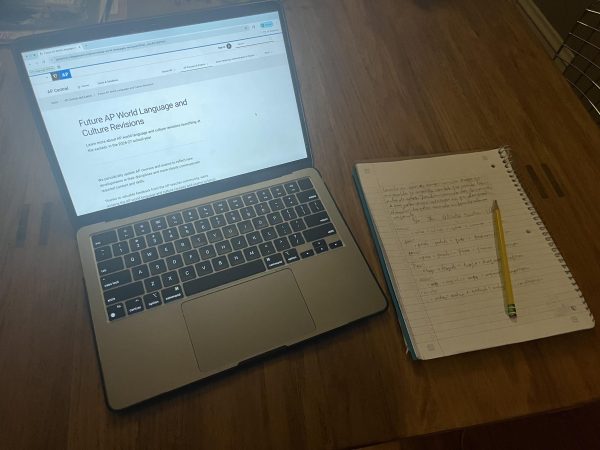
“I personally like having things on paper and being able to write things on paper just because it helps me remember and helps me grasp the information,” Claire said. “I really like having paper so I can annotate and make sure I'm doing everything right, but I think with [the tests being] online, it could definitely be harder to do that.”
The software used to conduct AP exams allows for minimal annotations, providing some assistance, but many teachers argue that the ability to take notes during listening exams plays an even more important role in a student’s performance.
“A lot of my students will frantically take notes while they're listening because they want to get as much information as possible,” Ms. Preciado said. The lack of transparency from the College Board leaves her to wonder “what are those test-taking strategies that [her students] need to master? What are the things that I need to present to them so that they can ultimately feel prepared that day of the exam?”
Many students, however, have already built experience with online tests. Maeryn, for example, takes AP Statistics, requiring her to use the digital platform Bluebook, the same platform that AP Language students will adopt next year. Her familiarity with online testing makes her even more confident in her critique.
“For me, the standardized tests are easier to take on paper because when you look at a screen for too long, your eyes [hurt],” Maeryn said. “You can't see as well anymore, and you're less focused when you're looking at the screen, whereas when you take it on paper, you can be more focused and you can take some notes.”
The disdain for online testing is not limited to math-related subjects. Claire finds that during her English tests, “it's nice to annotate. I like reading things better on paper.” She finds that during online tests she gets “a headache from reading.” She expresses similar feelings for math tests, where she finds “It's just easier to work out the problem.”
Despite the doubt from both teachers and students, some teachers find that their colleagues don’t share the same disdain for virtual testing. Ms. Preciado worries that teachers might feel differently about the changes.“It depends on how long [a teacher has been] teaching,” Ms. Preciado said. “So if it's somebody who just jumped into the profession a couple years ago, they might be like ‘Yes, Blue Book, we just need to be digital.’ Because they don't know any other way to do it, digitally is probably the best for some people.”
Ms. Preciado, however, remains resolute.
“People who, like me, who've been teaching for much longer are probably going to have a lot of the same struggles and the same worries,” she said. “The goal with the transition, ultimately, for me, is to make sure the kids feel like they're ready.”