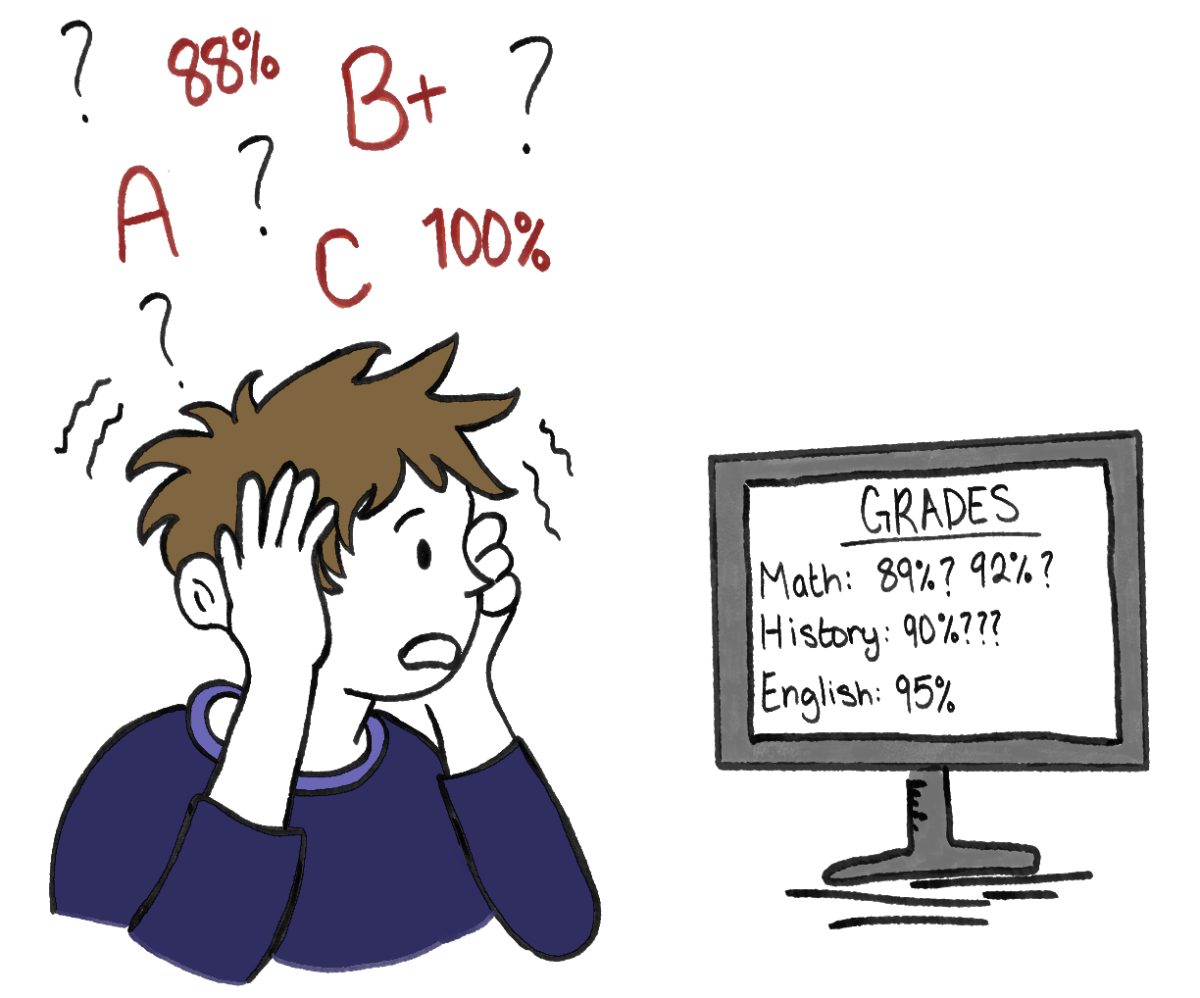








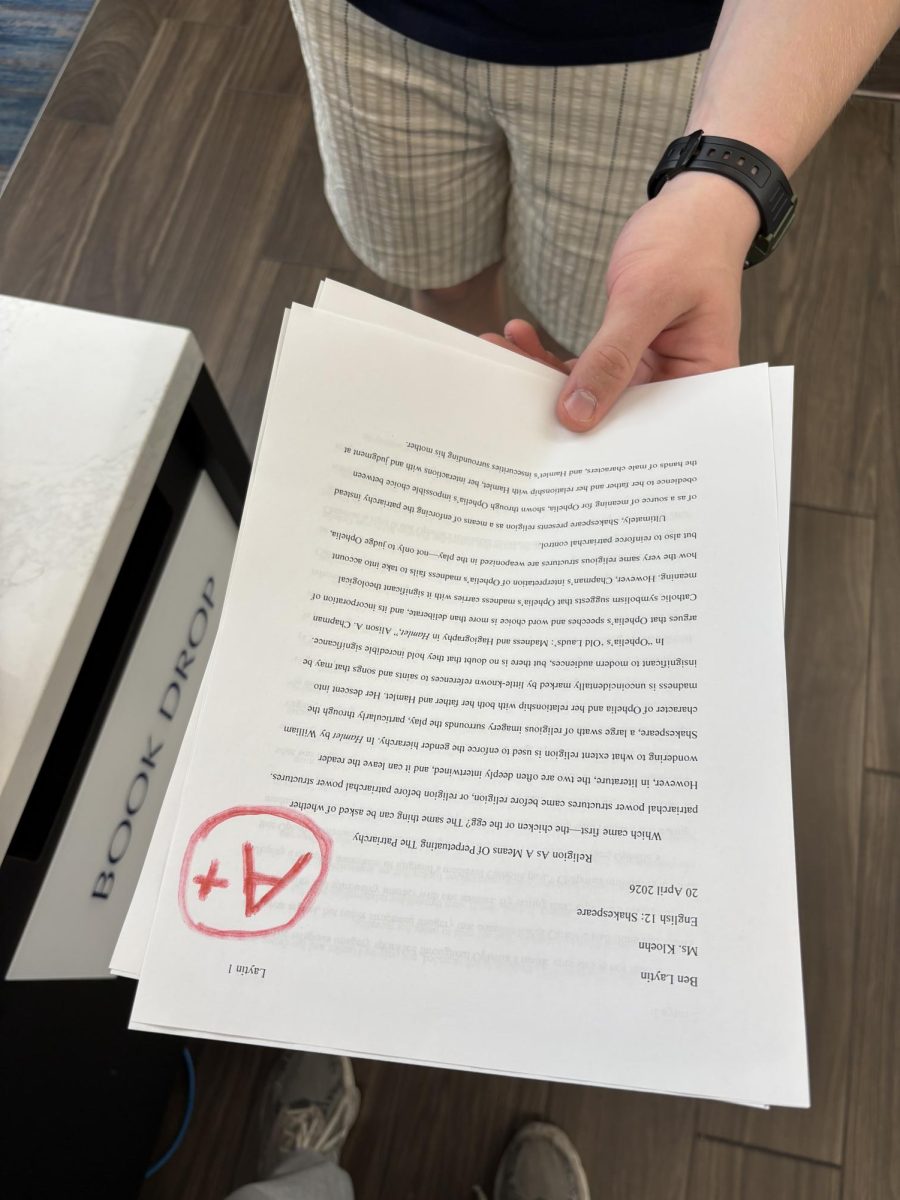




























My heart sank, and I began to sweat. ZEROGPT, an AI detector notorious among students, had robotically declared that the essay I had spent hours writing was 59% AI-generated. Impossible. I didn’t cheat!
I barely slept that night because I had no idea what to do.
Everyone’s been in that position, and if you haven’t, you’re probably lying.
Stories like this one circulate within our school. Walking through the halls, you can’t help but overhear conversations about which AI detector to trust and how to sound less like a robot. Nowadays, students must tread carefully to avoid overusing em-dashes, semicolons, repetitive structures, over-contextualizing sentences, or any other features that signal AI in their writing.
The fear of an academic integrity violation has become a norm in the writing process—even those who shun all Large Language Models run their work through detectors to reassure themselves. Writing is no longer just about communicating ideas clearly; it has become a game of avoiding suspicion.
However, these detectors often get it wrong. Instead of actually detecting AI, they rely on patterns like vocabulary distribution, sentence structure, and use of punctuation such as em-dashes. Additionally, as the market for these services rapidly expands, companies are now focused on profit rather than reliability, leading them to over-flag writing for more website visits.
Sadly, as I did in my nail-biting anecdote, students place lots of trust in these services despite their proven unreliability. Freshman Dexter Penugonda said, “It infuriates me when I put my essays through Grammarly’s detectors sometimes, and it claims that I used AI. Also, it really stresses me out because I think my teachers will mark me down for it.”
Given the widespread angst caused by these platforms, it’s easy for students to direct their frustration toward Latin. However, much of that anger derives from a misunderstanding of how Latin’s policy actually works. Many students assume that a high AI-detection score automatically leads to punishment, when in reality, Latin’s approach is far more nuanced.
Upper School Director Nick Baer said, “AI detectors absolutely are not foolproof. What [the school’s] decided is that it can be a red flag if you get something like an 80% detection, but it doesn’t mean you definitely cheated. Although we know that there is some cheating with AI, we don’t assume that a student did it just because of the AI detector. It’s just another aspect to help with the process.”
This distinction is critical. Latin is not blindly trusting technology; they’re using it cautiously, aware of its flaws. In an era where AI is evolving faster than educational systems can adapt, a perfect solution simply doesn’t exist. On one hand, doing nothing would allow blatant misuse to go unchecked, which, if we are being honest, likely exists for a (hopefully small) percentage of students. On the other hand, fully trusting detectors would unfairly punish honest students. Latin’s policy exists in the uncomfortable middle ground because, at the moment, it’s the only responsible place to stand.
While there is a slight variation between how individual teachers determine academic integrity, many of them share similar views to Mr. Baer.
Upper School English teacher Katie Jones said, “I treat those [AI detectors] as a reason to ask questions, not as a hard line that the student definitely was using AI inappropriately. We know that they can be faulty.”
She added, “There are a lot of other sources of information I would use if I’m trying to get to the bottom of an AI-use issue.”
Her views reflect a broader truth: AI is a new technology, and no institution has yet fully figured out how to regulate it. Expecting Latin to have a flawless policy ignores the reality that even researchers and developers cannot reliably determine whether a piece of writing was AI-generated. Latin’s approach acknowledges uncertainty rather than pretending it doesn’t exist.
Bottom line, if you run your work through one of these services and see a result that you know is inaccurate, don’t worry. If you know you truly did your work fairly, there are multiple ways to prove yourself. A number of my friends have been flagged for AI usage, and in the majority of cases, the teacher quickly determined there was no problem based on the student’s track record.
Given the limitations of detection software and the rapid evolution of AI, the school’s cautious, human-centered approach is very reasonable. Today.
But … I want to end on a note of caution to the school: Please stay vigilant, and be prepared to act quickly if and when AI makes its next leap—which will likely be much sooner than any of us imagine.