










The infamous “Frameworks of World History: Networks, Hierarchies, Culture” textbook, known informally as Morillo, is no longer a part of the ninth-grade Global Studies curriculum, where it served as the freshman history textbook for nine years.
Traditionally, the ninth-grade Global Studies: Networks, Hierarchies, and Cultures history course centers around one textbook that students discuss throughout the entire year. After using Morillo for nine years, the Upper School History Department has decided it was time for new reading material.
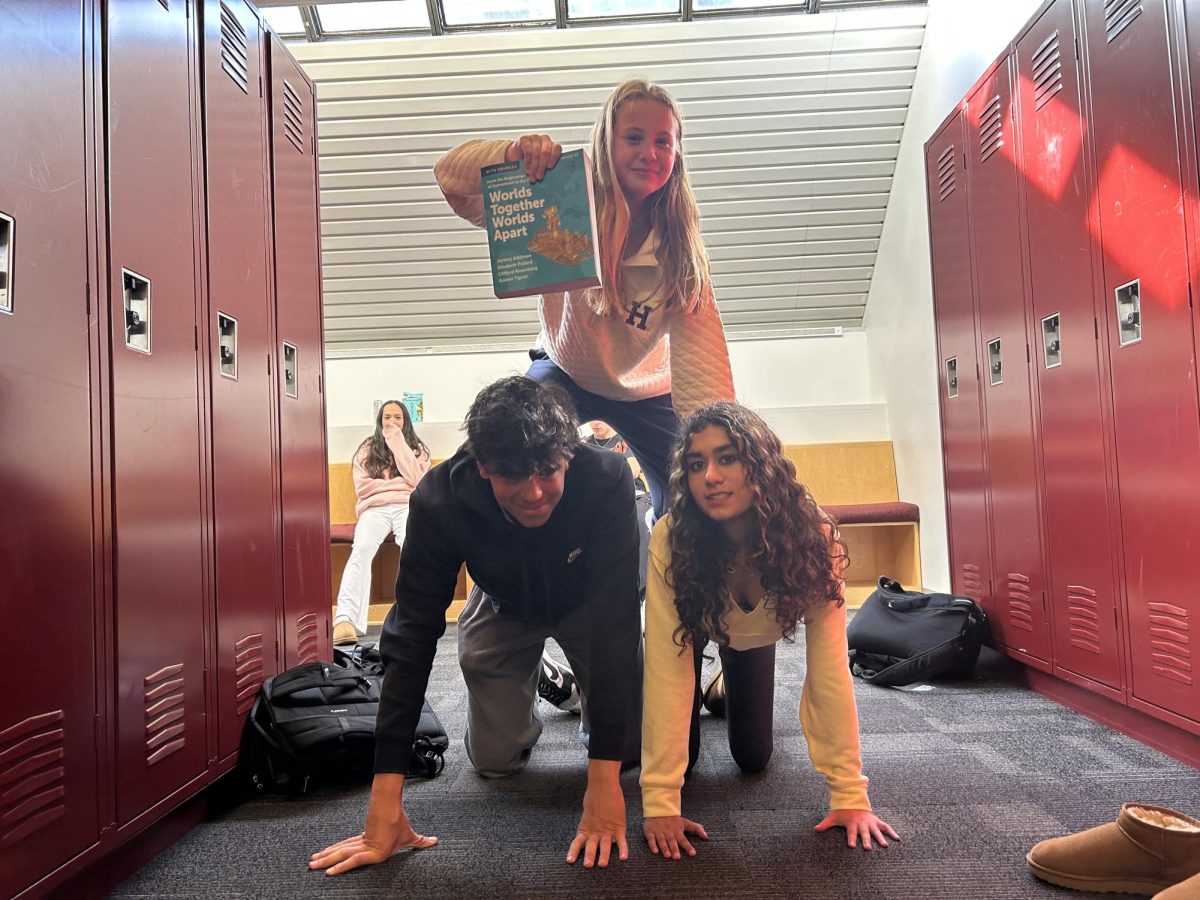
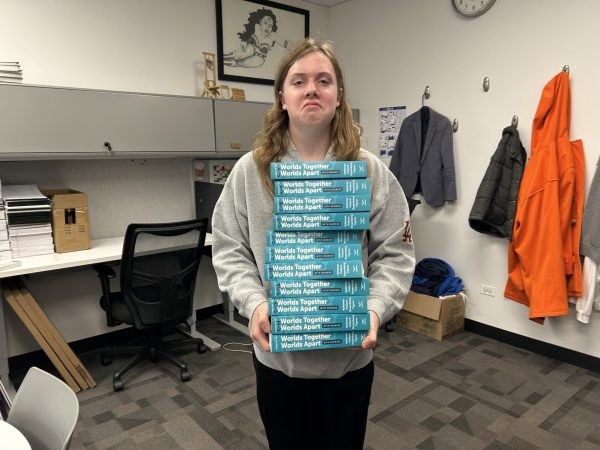
They settled on “Worlds Together, Worlds Apart” by Jeremy Adelman, Elizabeth Pollard, Robert L. Tignor, and Clifford Rosenberg. The new textbook has more structure, contains visual representations, and fits the ninth-grade comprehension level better than Morillo, thus fulfilling all of the history teachers’ checkboxes.
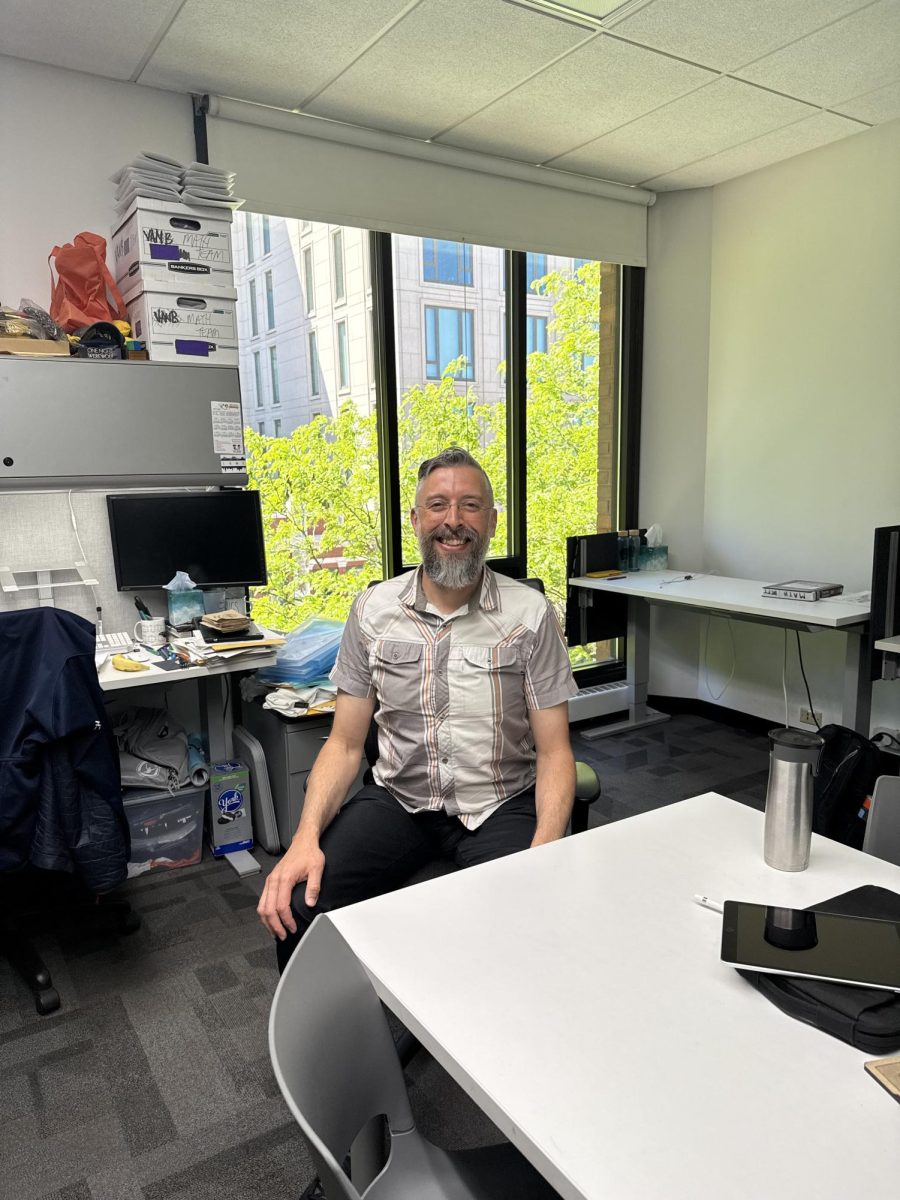
“We wanted a textbook that offered greater scaffolding for students,” Upper School history teacher Kristin Gulinski said.
To find a fit textbook, the ninth-grade history team examined candidates used by schools nationwide. After narrowing down their options, the history teachers met with a representative from the publishing company of “Worlds Together, Worlds Apart,” who guided them through the textbook’s features.
In their evaluation of “Worlds Together, Worlds Apart,” the teachers compared the textbook with Morillo. Upper School History Department Chair Milena Sjekloca said, “Worlds Together, Worlds Apart is more accessible. The Lexile reading level is lower, and it has more scaffolding features to help those who are not reading at grade-level. The textbook is beautifully illustrated, so it’s more enticing and pleasurable to read.”
The most distinctive feature of the new textbook is its comprehensibility. Previous freshmen, who were expected to understand a college-level textbook, have pointed out the challenge of reading Morillo. Sophomore Kaya Ercel said, “[The change in textbooks] definitely makes sense, because I would agree with people [in my grade] that [Morillo] was definitely a complex book to read.”
Moreover, the new textbook allows ninth graders to break down content into manageable components and gradually build their comprehension skills. Students are able to check their understanding through online practice quizzes, can easily locate parts of the textbook through an online search engine, and have access to a paired audiobook.
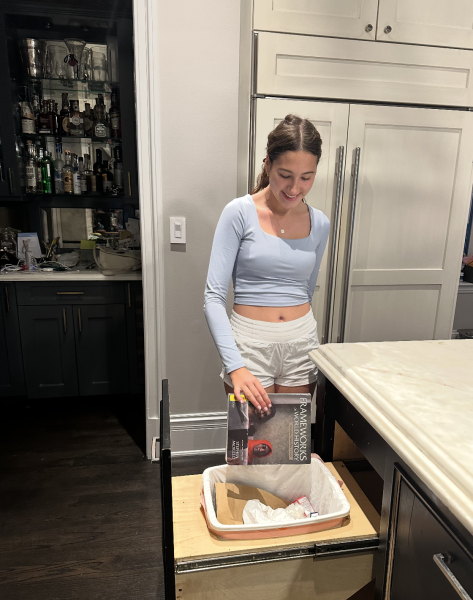 Sophomore Sloane Singerman throws away her Morillo textbook. (Dana Singerman)
Another one of the textbook’s many perks, as freshman Cece Pekow highlighted, is its layout. “One of my favorite parts of the book are the images and maps,” she said. “I think [the textbook] has a good ratio of [maps and charts to text] because some pages are all maps, and then some are all writing, but then some are mixed, so it works well.”
Although the premise and content of the books slightly alter Global Studies’s focus, the History Department strove to preserve a beloved part of the ninth-grade curriculum—every Global Studies student, across all sections, shares one assignment in common: the object essay. This assignment provides an opportunity for students to write about what they have learned in the textbook by relating a certain era of history to a historical object of their choice.
“The object essay demonstrates how historians utilize artifacts as evidence to support claims that address some of the key questions from our new textbook,” Ms. Gulinski said. Global Studies teachers want students to learn how to conduct research using various types of evidence, such as artifacts.
For many students, the object essay has made a lasting impact. “I liked that I could really hone in on a specific microsociety,” Cece said. “I thought that it helped me learn about how [people] have improved since [back] then, in many ways.”
Senior Clark Scroggins also appreciated the assignment. “I’m really glad the History Department decided to keep the object essay in the curriculum, because it was one of the projects that actually helped me get better at analyzing stuff instead of just memorizing dates,” Clark said.
While there are many aspects of using Morillo in the Global Studies curriculum that students enjoy, Upper School history teachers feel that the “Words Together, Worlds Apart” textbook has been a positive enhancement.
The Upper School history teachers strive for students to be challenged and build their skills, but “most importantly walk away [from Global Studies] feeling empowered by history and storytelling,” Ms. Gulinski said.