









































Note: Students interviewed for this article have been granted anonymity.
Vape and nicotine use quietly smogs the Upper School, with students potentially falling victim to addiction as adolescent vaping persists.
An Oct. 6 study from the World Health Organization (WHO) investigated the “tobacco epidemic,” revealing that 15 million adolescents worldwide use e-cigarettes. What’s more, children are over nine times more likely to vape than adults. The WHO has encouraged stricter regulation around the world on the sale and promotion of nicotine products, as they are working on “closing loopholes that allow tobacco and nicotine industries to target children.”
These dangerous trends affect Latin’s community. In fact, some students report usage behaviors and attitudes characteristic of addiction. In school, these students often feel the urge to take breaks from classes due to this compulsion. “I used to enjoy reading, drawing, and playing piano. Now, I really only find enjoyment in vaping,” Student #1, a junior girl, said. “When I’m in class, I feel like I have to go to the bathroom and vape—it is all I can think about.”
Teenagers who vape may experience anxiety, mood disorders, sleep disturbance, and problems concentrating. Eventually, those who vape may face immune system, circulatory, and other long-term health problems (carcinogenic compounds are often found in vapes). Teenagers also are especially susceptible to nicotine addiction.
Although no one has been caught vaping at Latin yet, the use of these products has been brought to the attention of the administration. “We actually haven’t caught any students vaping in the bathrooms this year, so most of the suspicion has come from other students discussing it,” Upper School Director Nick Baer said. “Any time underage students are using an illegal substance, it’s a concern, due to the negative health effects and the very real risk of addiction.”
Nicotine use is against school protocol, per the Student/Family Handbook, meaning those using these products on campus could face serious consequences. “A student could expect an in-school suspension, at the very least, for using illegal products on school grounds,” Mr. Baer said.
Although they know it is against the rules, people continue to use nicotine for a variety of reasons. “Although vaping does hurt my stomach, it helps a lot with stress,” Student #2, a freshman girl, said.
Vaping gained popularity in the United States more than 10 years ago, yet many do not know the extremity of these products. Upper School counselor Jane Knoche said that when she teaches the freshman-year Affective Education course, “Students are often shocked by how much nicotine is in an Elf Bar, a product they know is being used by peers.”
Students as young as 14 have reported vaping on campus. Compared to other methods of nicotine consumption like cigarettes, the relatively odorless and quickly dissipating nature of most vapes help conceal usage. “I think I get away with smoking at school by being discreet,” Student #2 said.
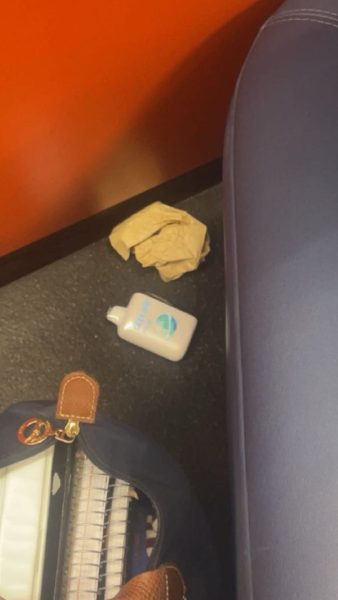
Students may be covert about their nicotine use, but sometimes they slip up. Junior Myla Robertson discovered a vape on the floor of the Upper School Pit on Nov. 2. Shortly thereafter, Student #1 claimed the missing vape belonged to her.
“I searched everywhere for [the vape] once I found out I dropped it in the Pit,” Student #1 said.
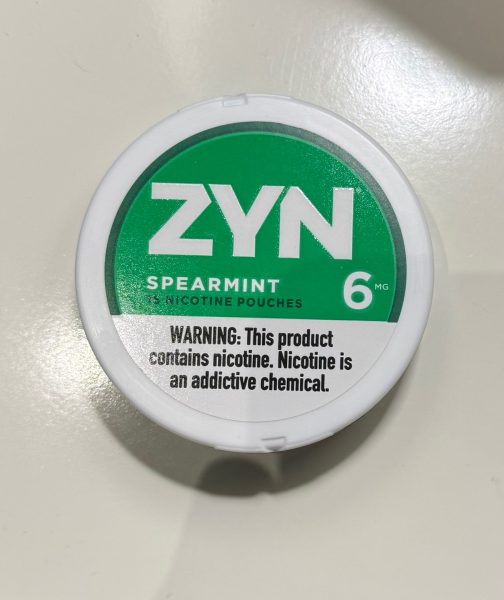
In addition to vapes, students also use other nicotine products, such as pouches—the most popular brand being Zyns—during school hours. Pouches are small, discreet containers that allow for the release of nicotine through the gums, offering adolescents a near-undetectable way to consume nicotine.
Zyns are a newer alternative to vaping that some believe is a healthier option. Although students often cite stress as one reason for nicotine use, others claim to use the substance for more recreational and social purposes.
Student #3, a senior boy, said, “I [use] Zyns to make classes less boring.”
Another senior boy, Student #4, said,“I felt smarter on [pouches].”
While nicotine is known for its addictive properties, some Latin students, including Student #4, have been able to quit, albeit with unpleasant withdrawal symptoms. Although Student #4 started using nicotine to improve his life and focus, he ultimately realized its dangerous, addictive properties. Within four months of consistent usage, he said, “I would worry whenever I would run low, worry what would happen without nicotine, which increased my stress. If I didn’t take them in class, I couldn’t focus.”
Student #4 said he was eventually able to stop using nicotine, resulting in benefits that outweighed the adverse effects. “I have better cognitive function 24/7, rather than only while using Zyns,” he said.
For students who are struggling with nicotine abuse, help exists both in and outside of the Latin community. One advocate for treatment, Prevention Ed specialist Luna Gayeski, recently spoke to the Upper School about their personal struggle with substance abuse to educate students about addiction. They explained that many teens turn to substances as a form of self-medication. “It makes sense that young people reach out to substances to cope with mental health challenges on their own,” Gayeski said.
Despite all of the concerning aspects of addiction, it’s important to highlight how complicated it is to quit alone, especially when students know it is prohibited and fear disciplinary action.
“If someone realizes they’re out of control, that’s a very scary feeling,” Gayeski said. “And so it makes sense that someone would be trapped further and use those substances to try and divert their attention from the gravity of their situation.”
Addiction can quickly control someone’s life, as evidenced in Latin students.
“I always feel the urge to take a puff in school,” Student #1 said. “I don’t even understand why anymore, and it honestly makes me emotional to think about how far it has gotten.”