



Note: Student names in this article have been omitted to preserve anonymity.
A group of high school girls spills out of their Uber and onto the sidewalk. The freezing Chicago air blows their hair into their freshly glossed lips as they clack their heels through the dark. The oldest-looking one takes the lead, confidently handing her ID to the bouncer of the bar they frequent. The stone-faced man, armored in all black, barely glances at the card before handing it back. One by one, the girls scoot into the sweaty bar filled to the brim with teenagers just like them.
At the Latin School, fake ID use is more prevalent than many know.
Our reporting team conducted an anonymous survey and personally polled almost every single junior and senior student, to find out that at least 65.9% of seniors and at least 51.1% of juniors have a fake ID—the majority of upperclassmen.
Seniors:
Juniors:
Fake IDs, or “fakes,” in the form of hard-copy plastic cards made to mimic a regular driver's license, are forged to conceal mainly the age, but sometimes the identity, of underaged students. With new technology, today’s fake IDs include scannable barcodes, holograms, and designs that are nearly identical to state licenses, making them increasingly difficult for professionals to weed out. While commonly associated with the possession of alcohol and drugs, their use has expanded to align with the changing technology and social norms, especially in urban cities like Chicago, where nightlife plays a central role in the student culture.
In fact, fake IDs have become normalized to the point where they have been described as an “American rite of passage.” In major cities, where house parties are less common and social life can revolve around bars, the pressure to have a fake ID can feel almost inevitable.
For most students, getting a fake ID is no longer a complicated or secret process, but instead something that spreads casually through friends, group chats, and social media.
One senior boy said, “I heard from some of my friends that there was a guy who could make fake IDs for students, and I got put into a group chat for it. Then I just took a picture of myself and paid, and it came within a few weeks.”
What can start as a connection on Snapchat—a popular multimedia instant messaging app—often feeds into larger orders, which may be led by fellow students who are looking to capitalize on the high demand for fake IDs.
A junior boy, who takes orders for these IDs, said, “Most of the time, people submit their info on a Google Form, and then I forward the information to a third-party supplier from China who then makes them in their factory and ships them to the U.S. in discreet packaging.”
The website this student uses to place orders is called DeepIDV. “They have this super-expensive machinery to make new polycarbonate IDs, which use heat and pressure rather than lamination to fuse all of the layers together,” the same junior boy said. “They have a significant amount of staff to edit the photos and signatures to fit the template, deal with customer support, and actually make the IDs.”
Although organizing a fake ID order is a precarious job, some high schoolers feel impelled, given the potential monetary benefits, which can be enormous.
“Someone I know has made money in the high six figures from selling to people from across the U.S. and even internationally,” a junior boy said.
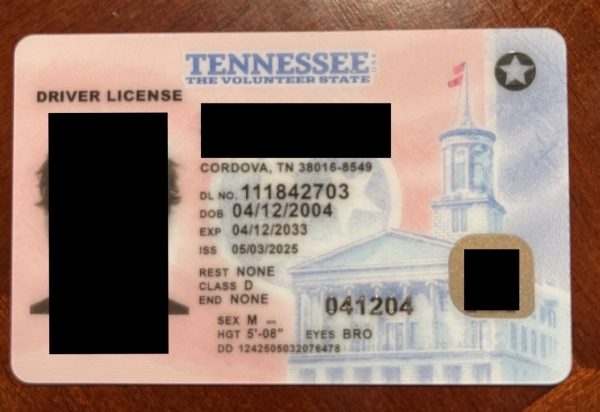
High profits are possible only for a successful product. Indeed, sometimes the fakes are near-impossible to tell apart from legitimate IDs. One junior boy said, “Some specific IDs are nearly indistinguishable from their real counterparts, such as Tennessee, Indiana, and Vermont, forcing bouncers to rely on ‘vibes’ or appearance to make an informed decision.”
Upperclassmen use fake IDs frequently and for a wide range of purposes. “I use it for buying Zyns, alcohol, and getting into bars,” a senior boy said. “I have even gotten my ID taken away a few times by bouncers at bars, so I have had to get a few new ones. I think I have spent over $250 on IDs over the years.”
However, even when a bouncer spots and confiscates a fake ID, the consequences are often minimal. “I have only gotten my ID taken once at a club, but nothing ever came after that,” another senior boy said. “I have not had much trouble using it.”
These soft consequences stem from bouncers balancing strict enforcement with the need to keep customers.
“In my opinion, the bouncers and bar owners are aware of this younger crowd and even capitalize on it through unusually high cover [charges],” a junior boy said.
Underclassmen, however, feel more limitations on how they can use their fake IDs.
“I think being a sophomore makes getting into bars harder, so we resort to just using our fakes to buy drinks,” a sophomore girl said. “We mostly go to 7-Eleven and Liquor Expo, I’d say around 50/50.”
Due to their younger appearance, freshmen and sophomores usually have less success using fake IDs at real establishments. This is reflected in the mere 3.25% of freshmen and 23.39% of sophomores who have fake IDs.
Sophomores:
Freshmen:
However, underclassmen find alternate ways to access alcohol without using fake IDs, including relying on older friends or lenient store employees.
“The girls in my grade don’t need to use [fake IDs] that often because other people get stuff for them,” a freshman girl said. “I know one time some girls went into a random store, maybe Costco, and got alcohol because they were celebrating [one of their] birthday[s]. But the guy knew the IDs were fake; he just didn’t really care.”
At Latin, faculty and staff may have a limited grasp of what fake ID practice actually looks like among the high school population.
In terms of how they are acquired, Upper School Director Nick Baer wonders if there is a single student in charge of producing them, or if they could be easily manufactured with 3D printing technology. He would like to know, “How many kids have [a fake ID] compared to how many actually use them, and how often?”
According to Mr. Baer, Latin usually learns about fake ID use only when students are reported to the school by outside sources, such as police or bars, which happens rarely. Once an administrator becomes aware of a fake ID, they contact parents and may issue disciplinary consequences. While the school cannot practically regulate the use of fake IDs off campus, if an issue is brought to their attention, there could be consequences for any students involved. Punishments can escalate situationally, whether the police catch a student using a fake ID or faculty finds that a student is supplying alcohol to other underaged students.
Mr. Baer hopes that even outside of school, students will act responsibly, follow Latin’s guidelines, and uphold the school’s reputation. “I encourage students not to be stupid when it comes to the accessibility of fake IDs. The risk versus reward is not generally worth it, especially when talking about going to a bar in the city, where you could be seen by a community member or the police,” he said.
After all, any form of identity fraud is illegal in every U.S. state, and possession of a fake ID can be considered a misdemeanor or even a felony, depending on the circumstances. When used for underage drinking, possession of a fake ID could result in fines, community service, and even jail time, based on the state you live in.
In Chicago, for example, possession itself, not just use or attempted use of a fake ID, is enough to be considered a Class Four Felony, which can lead to one to three years in prison. Illinois’s policies are harsher than those of many other states, where first-time possession is often charged as a misdemeanor.
Given the possibility of these severe punishments, do Latin students accurately assess the risk of using fake IDs?
“To be honest,” a junior girl said, “I try not to think about the possible consequences when I am out using my ID.”




Mr. Joyce • May 28, 2026 at 10:48 am
Dang. Two thoughts:
(1) I worry about our students getting themselves into trouble or getting hurt as a result of using these IDs.
(2) Very impressed by Cece, Wyatt, and Mira for putting together such a thoughtful piece on a really contemporary issue. Great work, Forum!