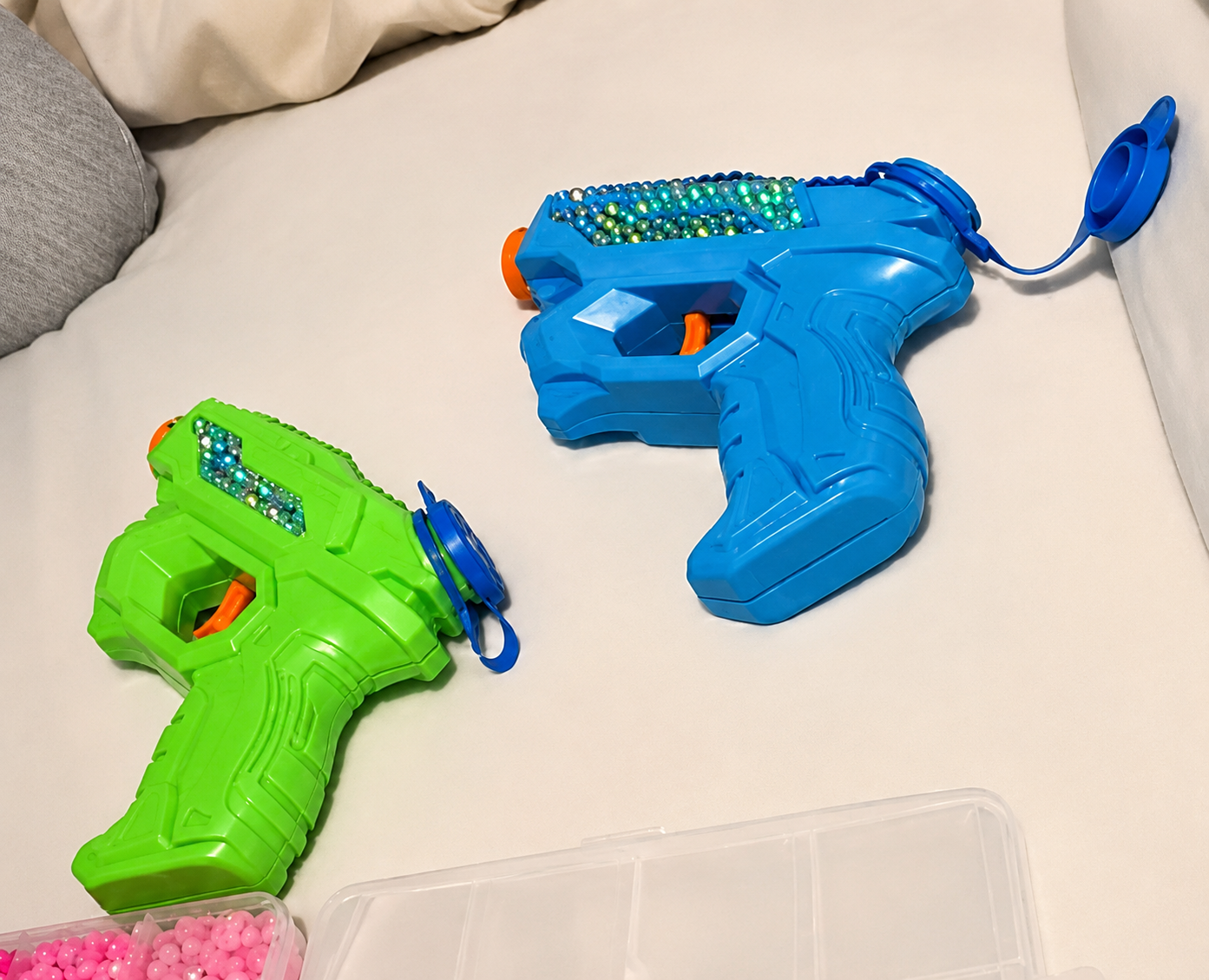
As the clock hits 3:20 p.m., students frantically rush to their backpacks, pulling out swim goggles or neon-colored floaties while urgently scanning their surroundings. A glance over the shoulder, a sudden change of route, and a water gun never out of reach—this was what daily life looked like for seniors who participated in the notorious Senior Assassin game.
Senior Assassin, a student-organized springtime tradition for high school seniors around the U.S., acts as a final rite of passage before graduation. It creates lasting memories through a high-stakes, off-campus game of water-gun tag, often involving a pool of money for the winner. At Latin, participating students each paid a $15 entry fee, creating a $1,300 prize pool to be split among the top three finishers: 60% for first place, 30% for second, and 10% for third.
To protect themselves from elimination, contestants carried designated “immunity items,” most commonly playful objects like pool floaties or swim goggles, which shield them from being targeted as long as the items are visible.
This year at Latin, more than 80 students participated, one of the largest groups in the tradition’s history. Beginning on March 30 and ending on May 17, the game unfolded over four rounds, each spanning around two to three weeks.
Senior Beth Rosenow, the student who organized the game, prided herself on her ability to unify the grade. “As the head of Senior Assassin, my goal was to make it an all-inclusive grade experience, rather than like past years, where friend groups would do it individually,” she said. “I think broadening it out into something the whole senior class can participate in, as other schools do, helps to make it more enjoyable and fun.”
Beth’s role extended beyond organizing. Whether she was updating Instagram with the latest elimination or selecting each round’s immunity item, ranging from oven mitts with cartoon patterns to an eclectic rainbow clown wig guaranteed to turn heads, she helped keep the students engaged throughout the competition.
The subsequent increase in participants only made the competition more heated. Senior Ruby Larsen, a contestant who made it to the third round, expressed the stress the game had brought to her daily routine. “I worry more about making sure I have my goggles or immunity [item] when I leave my house than making sure I have my things for soccer and track,” she said.
For many participants, the game transformed everyday activities into strategic operations, with ordinary routines suddenly becoming vulnerable moments for elimination.
Ruby recalled one of her closest encounters occurring at the beginning of track practice at Hope Academy.
“I had just put my running shoes on, but we were waiting to start the workout, so I was just standing around, and the person came up and sprayed me,” she said. “I waited for hours as the person in charge of the game deliberated, and luckily, since I had my shoes on, it showed I was at practice, which guarantees immunity.”
While immunity rules sometimes saved players from unexpected eliminations, lasting success in Senior Assassin depended less on luck and more on strategy. Senior Timothy Kempton, one of the final contestants, described his typical approach to eliminating his opponents. “To get people out, I usually try to figure out a place my target is going that they won’t likely be wearing their protection items, like a job interview or a dinner,” he said.
However, as the competition narrowed down, the stakes only intensified. Senior Sydney Dibble, who made it to the final six, experienced firsthand making a careless mistake, resulting in her being eliminated after forgetting to wear her immunity item. “I had made it to the final six, and it was a purge day [standard safety rules are suspended, hence immunity items don’t work],” she said. “I went to work, a senior facility, and as I was leaving to go to a hair appointment, I forgot to turn my location off by putting my phone on airplane mode, which freezes your location. But before I remembered, I got out.”
Despite the stress, strategic planning, and unexpected eliminations, Senior Assassin became a defining part of students’ final weeks at Latin. What began as a competitive game of water-gun tag evolved into a shared experience that created stories and memories that extended far beyond the prize pool.
On May 17, five seniors remained: Timothy Kempton, Elena Tognarelli, Julia Steffen, Joey Fineberg, and Ellie Falk. Rather than battle to the finish, the group agreed to split the prize money and bring the game to an end.
Julia said, “Senior assassin has been one of the highlights of my final year at Latin. The fun, energy, and laughs it has brought to our grade are moments that I will never forget, and I hope the tradition continues.”