



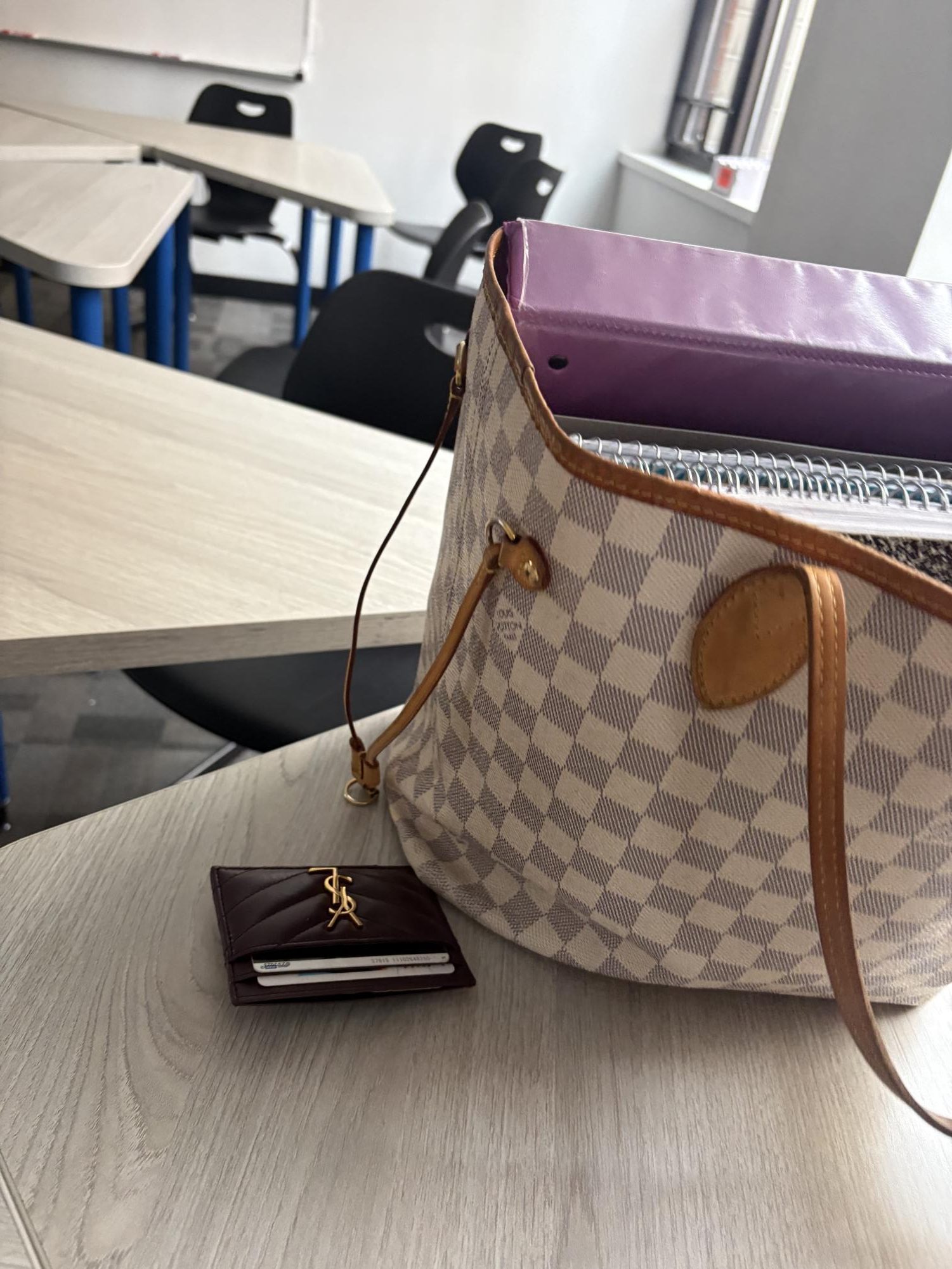
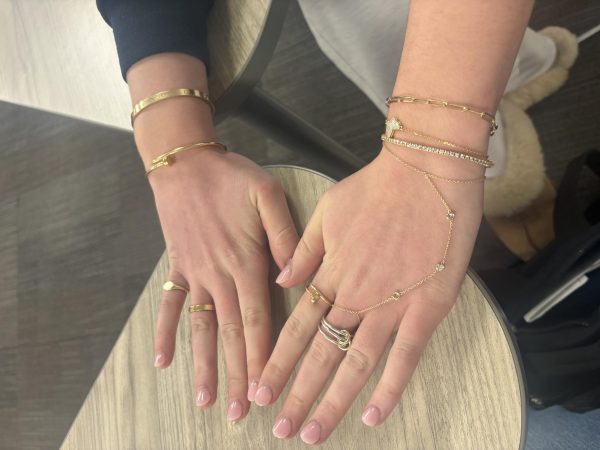
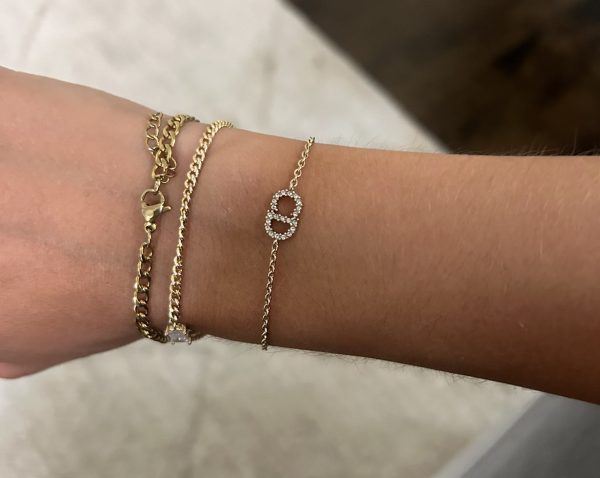
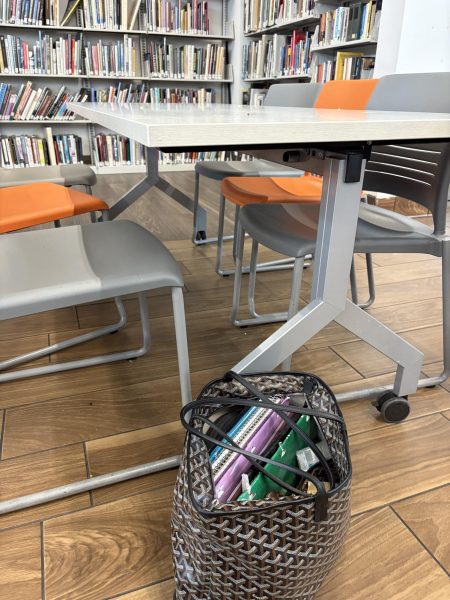
As students shuffle into the assembly, two friends walk in, one wearing over $20,000 in jewelry, the other wearing a bracelet purchased on sale from Amazon for $25. An athlete comes into school carrying a hand-me-down sports bag, tossing it on the floor of the Pit next to a $3,000 Goyard purse and a vintage bag sold at a secondhand store downtown.
Outsiders may look at Latin’s notably high tuition and privileged reputation and expect students to wear expensive accessories and apparel daily. In reality, though, students spend in diverse ways—shopping at popular brands, online stores, and secondhand options—and also vary in how they afford these items, some students with jobs and others with parental financial support.
Junior Jack Wilhelm recognizes that some students spend more than others. “I feel like there is sort of a culture around having more expensive things because most kids who go here are pretty wealthy. There is a culture, but not a pressure. No one is worried if you are spending a lot or not,” he said.
Senior Miles Stagman agreed with Jack’s assessment that many students tend to participate in buying new clothes and accessories, but he believes the root cause of this spending environment comes from a need to fit in—a veritable social pressure.
“The culture at Latin around people buying similar things really just revealed that people feel the need to conform because they are not really comfortable with themselves, and that’s fine, that’s what high school is about. They are figuring things out,” he said.
Although Miles accepts the natural insecurities that accompany adolescence, he wishes the environment at Latin could be different. “I guess the conformity is sometimes frustrating,” he said, “because I wish people were more comfortable with being themselves and not buying things because that’s what everyone else is buying.”
While Miles attributes this spending to a lack of confidence, sophomore Sonya Hu-Lowenthal feels that social media affects these spending habits.
“I feel like at Latin there is a culture that sort of encourages [spending money on clothes and accessories],” she said. “I think it’s heightened because people like to dress up to school and post their outfits on TikTok, so I think there is a little bit of pressure just to buy new clothes.”
These spending patterns transcend Latin. The Economist attributes the general trend toward consumerism to Gen-Z social media, which uses influencers to promote brands and online stores to teen shoppers.
“Online shopping is so easy to do, especially because of TikTok and Instagram and even just other websites,” Sonya said. “You consume so much, and it’s so easy to see something and want it.”
Social media customizes and caters ads toward students’ interests, feeding them algorithms that exploit their spending habits. At Latin, this shopping phenomenon often reaches high prices. In a poll conducted across the Upper School, 111 students responded to questions about their spending habits, with four students estimating they spend over $10,000 a year on clothes and accessories, over five times the average annual estimated spending of $2,113 for teens nationwide.
Although most students don’t spend nearly this much, shopping culture is nearly inescapable, no matter what one's price range may be. In the halls and even during classes, students scroll through online websites in search of new additions to their wardrobes. These habits align with a trend among Gen-Z teens, whose “appetite for instant gratification” drives these tendencies.
“For me, shopping is a way to immediately ease my anxiety,” junior Naomi Herman said. “I like online shopping when I am stressed, because I can shop for specific events that I am excited for, like Lollapalooza or Spring Break.”
Latin students vary in how they afford their items: some whose parents buy them, and others whose jobs pay for these pricey purchases.
“Since I don’t currently have a job, instead of a specific amount of money that I am allowed to spend on clothes, I am really lucky that my parents will usually buy me clothes when they feel it is necessary,” Naomi said.
Naomi’s experience, however, reflects just a portion of students’ spending habits. Of those who answered the poll, the majority of students, around 57%, said their family purchases most of their clothes; however, around 40% of students reported that they pay for these items themselves, with 3% answering that a combination of themselves and their family purchases their material goods. https://public.flourish.studio/visualisation/28453991/
For many students, like junior Makayla Gonsky, their purchases are situational. “If my parents feel that something I want is worth spending their money on, they will buy it for me, but if I want a clothing item that they think is unnecessary, I need to buy it with my own money. That’s why having a job has been helpful,” she said.
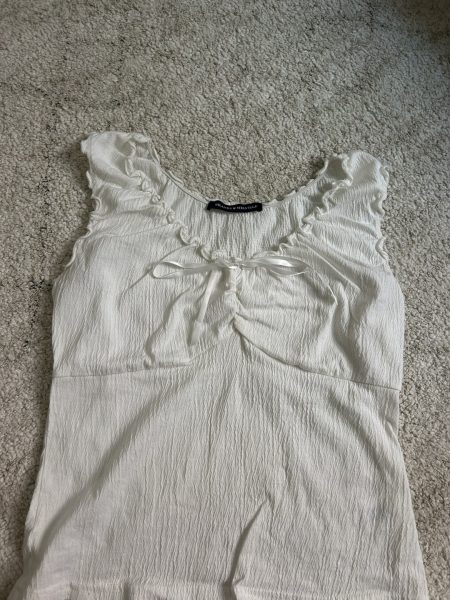
Many students, when shopping online, care about more than just fast fashion. “For me, I care about the quality of my clothes if it is something I know I will wear a lot,” Naomi said. “ I would rather purchase something that will last me a long time, that may be more expensive than buying cheap, poorer quality clothes from Shein or Amazon, which I know will go out of style quickly.”
Although Naomi prioritizes quality over price, others like freshman Serene Alsikafi buy from fast-fashion stores such as Shein. “I shop from there because it is much cheaper, and I don’t mind compromising quality for affordability,” she said.
Naomi and Serene—despite their differences in store preferences—both shop at popular stores often advertised on social media. However, other students, like junior Chloe Ramette, shop less mainstream, often thrifting instead of buying clothes firsthand.
“I like thrifting because you can find things people buy off websites, except that it’s cheaper, and it’s also less destructive for the environment,” Chloe said. For example, I will rarely buy a top from Brandy Melville off the website because when I go to thrift, I can find all of these tops for cheaper, and I don’t feel as bad for purchasing them.”
Not only is thrifting often a more affordable option, but students like junior Finn Parr view thrifting as a hobby, finding joy in searching for the best deals and unique items.
“When you find an item for a really good deal, it really pays off,” Finn said, “because it feels like you worked for it, and it’s such a great feeling when someone compliments you for something you thrifted, because you feel like you found it, and it feels like it's yours.”
While some students, like Finn, shop secondhand for the aesthetic, others, like Miles, thrift for the environmental benefits. Miles tries to avoid participating in excessive consumer culture, so instead, he purchases with more caution.
“What I’ve tried to do is really think about what I need in my life for the basics to get dressed, toiletries, and that’s about it. If I want something more fun or fancy, I go to a thrift store or go and see if my grandparents have something I can use,” he said.
With regards to the environment, Miles recommends buying from sustainable companies such as Reformation, Fair Indigo, Warp & Weft, and The Eco Flamingo, among others. For example, his Allbirds shoes, made of recyclable material, represent his eco-friendly purchases, which positively impact the environment and his life.
“Every day, when I put [my shoes] on, I feel proud because I know I spent my money supporting a company that uses sustainable products,” he said.
Although rewarding, other secondhand options, such as vintage stores, can be pricey for students like Finn who have a self-prescribed “shopping addiction.” “Just because I buy at vintage places, I still end up spending a lot of money, and I love buying new clothes,” he said.
Whether students must pay for their own clothes and accessories or not, the majority, 63%, do have an external source of income, a much higher statistic than the national average of 22.5% of high school teens with jobs. From part-time jobs during the school year to summer jobs and babysitting, making money allows students to choose how it’s spent.
For Makayla, working at the boutique store Frankie’s on The Park has taught her life skills. “Having a job has shown me that it takes a long time to save up money and taught [me] how to balance my expenses,” she said. “It has put things into perspective, which I think will help me later in life.”
While students like Makayla work year-round, other students, like Jack, work over the summer to save up. He said, “I started working at my job as a camp counselor at Wrightwood Park, and I have found that having a job has shown me independence and taught me what it means to work for what you want or the goals you have.”
Students don’t just appreciate these benefits—parents, including junior mom Jodi Glickman, believe that financial self-reliance early sets students up for success in the long-term.
“I think every teenager should work,” she said. “It’s hard to learn the value of money if you don’t have to earn it yourself. If you earn money, you have a different relationship with how you spend it.”
Ms. Glickman has seen firsthand through her kids the impact of having a job. “Having a job is empowering, and it allows you to make decisions instead of always having to ask,” she said. “It’s about making tradeoffs and has shown my kids responsibility, confidence, ownership, and financial awareness.”
For Jack, this financial independence means he spends less regularly and instead buys items he sees as unique or useful. “I don’t spend too much on a regular basis, but I do buy clothes once in a while. For example, I got a quarter zip in Italy when I went for Project Week,” he said. “I also spend most of my money on golf stuff like clubs and driving range balls.”
Similarly, senior Charlie Yannias does not usually spend his money on clothes, touting most of his spending to recreation. “I spend most of my money on golf, specifically tee times,” he said.
Although having a job has shown these students the value of work, other students, like Naomi, focus their efforts on school and extracurricular activities. “Although my parents recognize the importance of working, for now, during the school year they are telling me to prioritize my education and volunteer work,” she said.
While students of all ages have jobs, upperclassmen are more likely to outsource their income, with freshmen making up only 17.5% of the students who responded yes to having a job.
For Serene, not having a job can dictate where she spends her own money. “Since I don’t really have a job, there are a few places I shop from with my own money. Shein and Amazon are significantly more affordable than other brands, making them my first choices when buying something myself,” she said.
Despite these divergences in work experience and allowance, many students appreciate the wide spectrum of spending habits at Latin. “Although when coming into Latin, I sort of thought everyone would wear the same things and buy from the same places, after spending three years here, I have come to realize that a lot of people have very different preferences and experiences that affect how and where they spend money, which is honestly really nice,” Makayla said.







Adam • May 5, 2026 at 11:13 pm
Very, very well-written article, and you all come up with some great points. I feel like even as students, you still wrote this without bias. An additional step another article could approach would be comparing Latin students’ lifestyle to that of a kid who attends a public school.