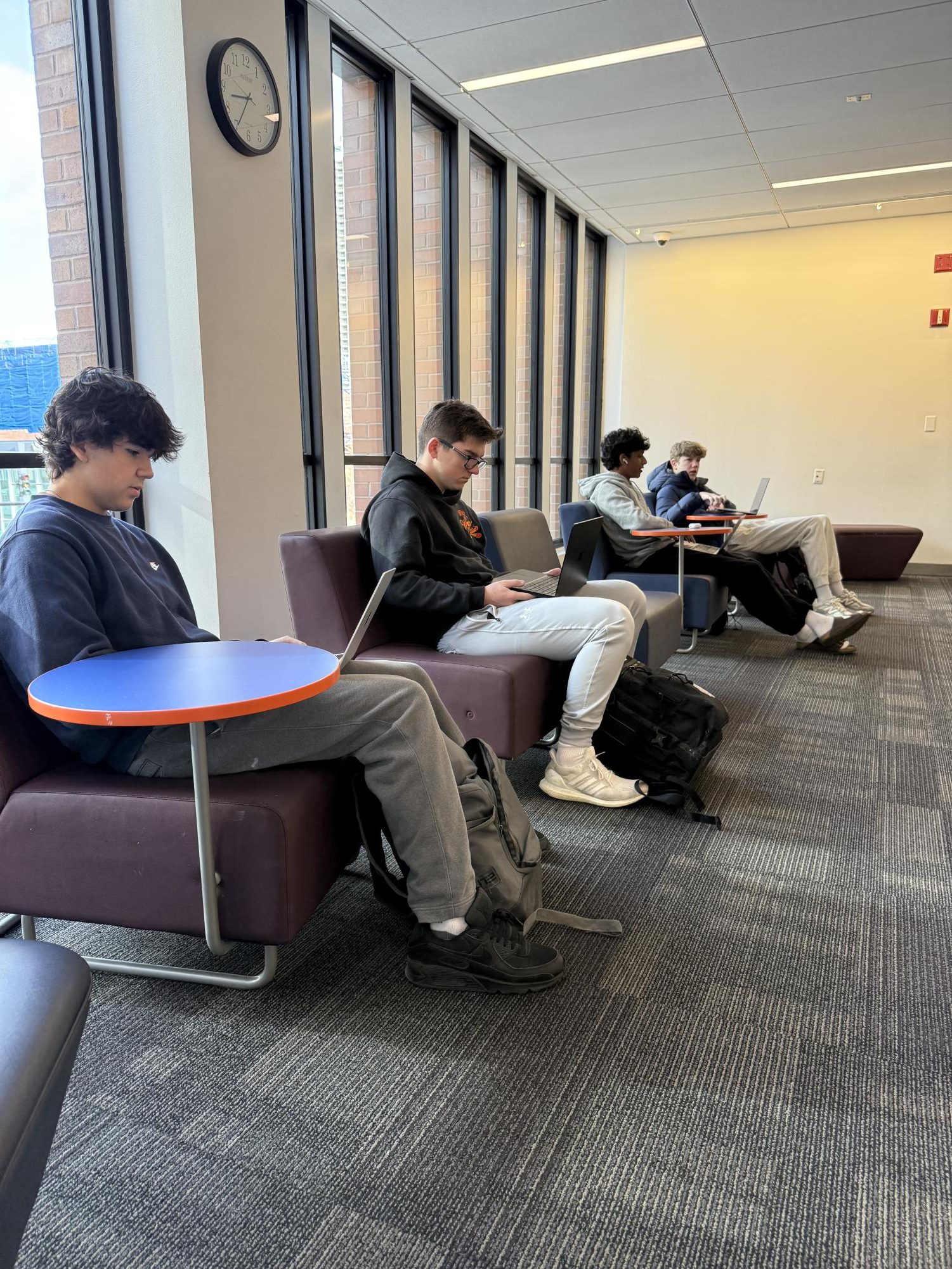
The kiosk fills with open computers, scattered headphones, and a mostly silent atmosphere, besides the occasional passerby to grab a latte or bagel. Down the stairs in the Learning Commons, students chat and play cards competitively, laptops nowhere to be found.
Since the start of Latin’s phone ban last August, many students have made it clear that the step away from phones is welcome and have substituted their time on screens with face-to-face interactions. But others retreat to the only screens they have left: their computers, the policy’s one key flaw.
The result? Technology still permeates the school’s social atmosphere, especially in places where students like me crave face-to-face interactions with new people.
It makes me wonder when we started replacing social time with doomscrolling (scrolling endlessly through social media). In “Incredibles 2,” the movie's villain, ‘Screen Slaver,’ complains that we all have the “brainless desire to replace true experience with simulation” and have every “meaningful experience[be] packaged and delivered” to us.
Outside the Incredibles universe, his message still hits home. If we want to harness meaningful connections with our peers, it’s vital we take real risks and move toward deviceless community spaces. School should be about learning how to be a peer and community member, which requires careful attentiveness. Unplugging could help us all unwind and to get to know our peers better.
If we continue to replace real experiences with engaging in screens, we’ll lose the social skills we desperately need as we go through high school and beyond. Our habits can’t persist without consequences.
So as a community, we need to remove screens from our social lives. If we want to have healthier, more engaging and fulfilling moments, face-to-face with each other, we can’t be looking at our devices.
This shift in lifestyle will lead to better productivity, higher engagement in other activities, and a sense of focus among students with busy schedules. When students take time to go through their day without distraction and finish their tasks accordingly, they succeed cognitively and emotionally.
But we need to want that lifestyle to create true effect—we need to encourage students to make the personal choice of closing their laptops. As we head into the fourth quarter, we can all work toward this habit. I urge you: swap scrolling for formulating conversation. Hold your friends accountable and set goals to limit screen time for yourself. Next time you're in school, remember to look up from your computer and see who’s around you.