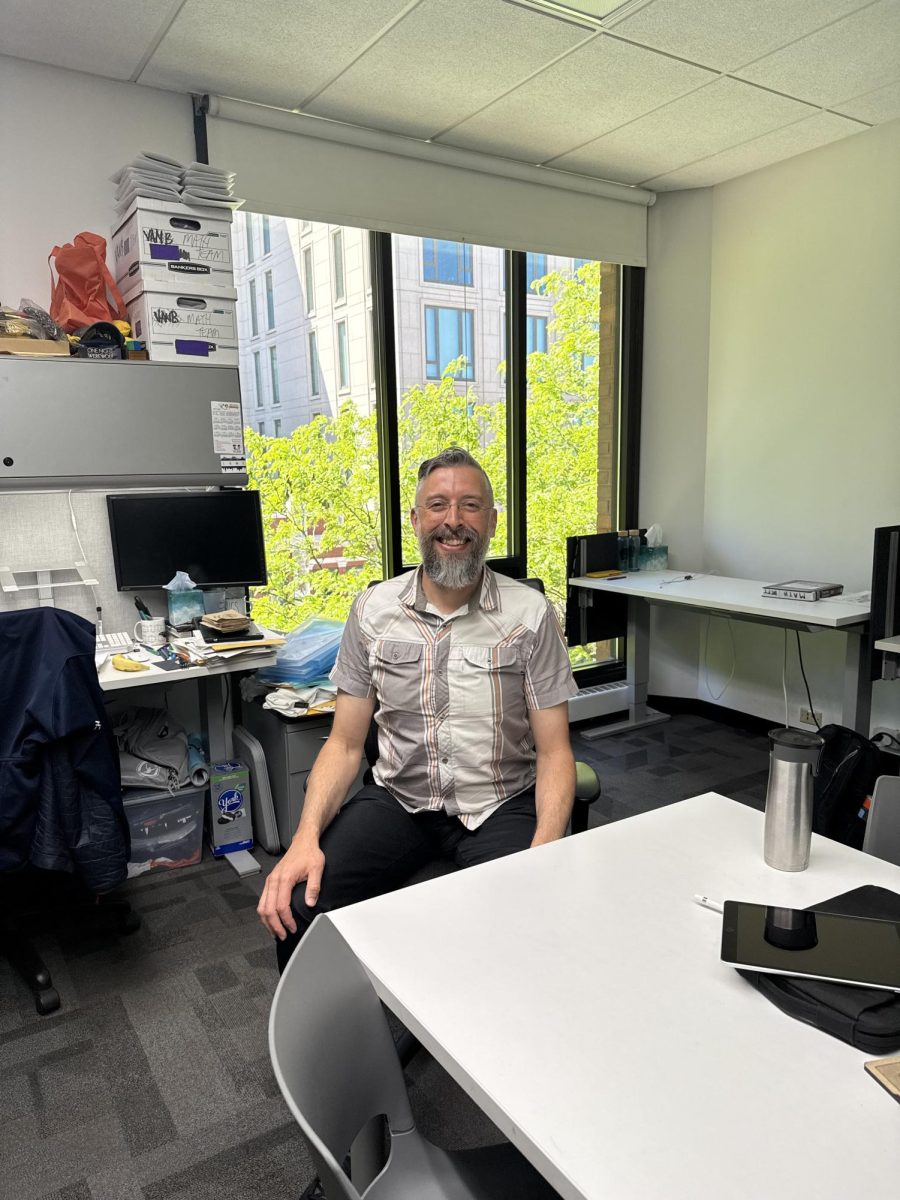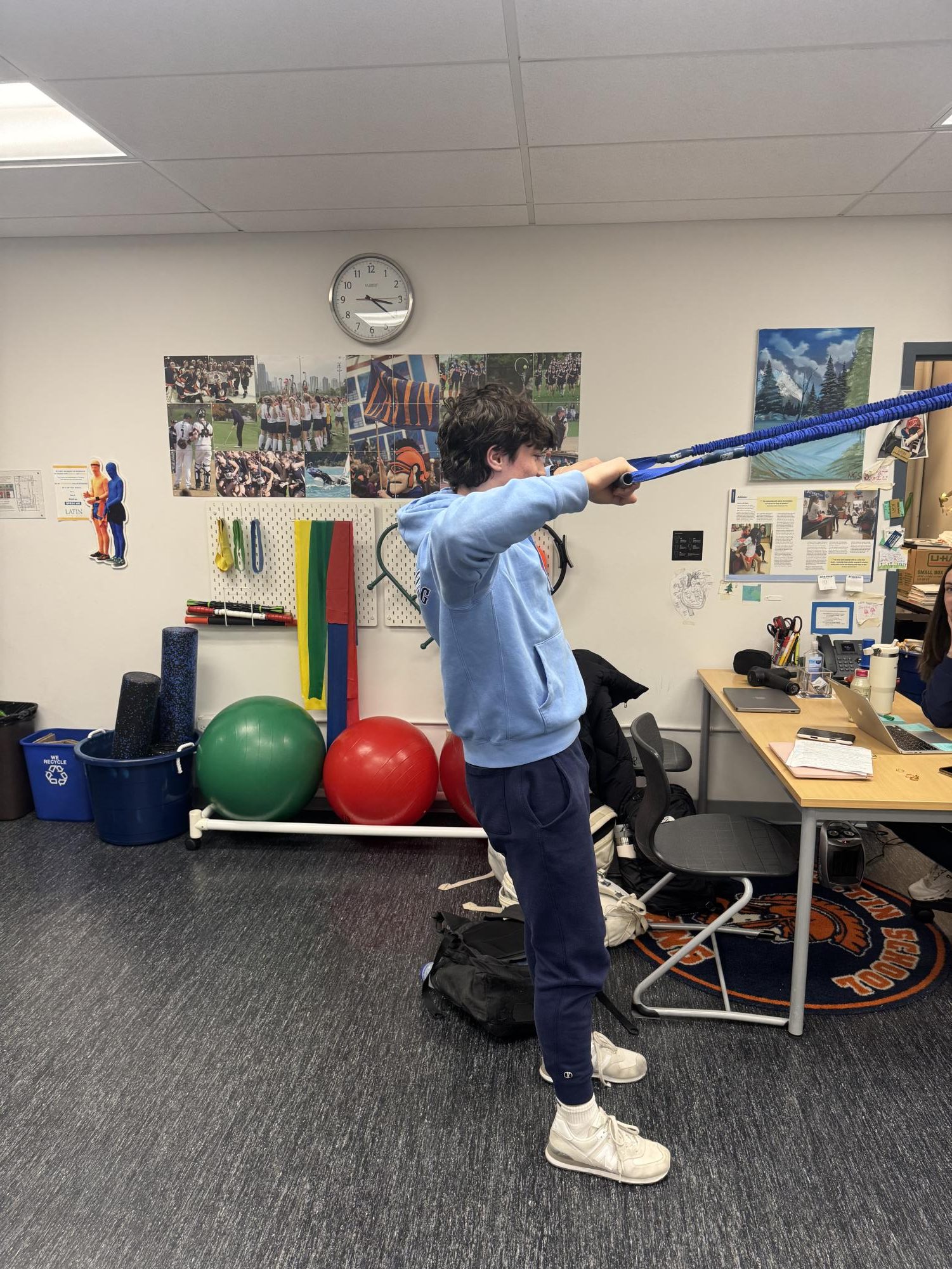
The Athletic Trainers’ Office is more than a quick stop for ice and stretching—it is a welcoming, permanent space where athletes’ recovery is taken seriously, whether they’re stopping by during a free period or before practice. This year, the office doubled in both size and staff—a second athletic trainer, Ari Adrahtas, now works alongside longtime trainer Jessie Heider.
The school’s addition of a second trainer reflects the scale of Latin’s athletic program. “We have over 40 teams in the Upper School alone, plus all of Middle School athletics, and we only had one athletic trainer that was responsible for covering and supporting all of them,” Athletic Director Katie Johnson said. “It just wasn’t sustainable.”
Coach Johnson noted that adding a second trainer allows the school to provide students with speedier care across all of Latin’s athletic programs. “It adds more consistent coverage and quicker access to care,” she said. “Most importantly, though, it ensures our athletes get the attention and support they deserve every day.”
Before Latin had two athletic trainers, all responsibilities fell on Ms. Heider, who has been working as Latin’s trainer for 16 years. She was drawn to athletic training because it combined her two biggest interests: sports and medicine. “I've always had a love of sports and knew I wanted to do something in a medical or health-related field,” she said. “Athletic training provided me with the best of both worlds.”
Ms. Heider earned her bachelor of science in athletic training from Purdue University and earned her master’s degree from the University of Cincinnati, where she worked as the athletic trainer for the women’s lacrosse team. After completing her training, she moved to Chicago and began working at Latin.
Behind the scenes, Ms. Heider is in constant communication with doctors, physical therapists, parents, and coaches, keeping detailed records of injuries and progress. “Each day is a little bit different, which is something I've always enjoyed,” she said.
Her favorite part of the job comes at the end of the process, when an athlete who has been sidelined can finally rejoin their team and play. “Being the one to evaluate, treat, and rehab the injury and seeing the student-athlete recover and return to their sport is always a highlight,” she said.
The newly hired trainer, Mr. Adrahtas, followed a similar path. As a high school athlete, he volunteered with his school’s trainer and realized he wanted to do the same work. “I love sports, and I love helping people, so naturally for me it was the marriage of the two,” he said.
To turn his passion into a career, Mr. Adrahtas earned his bachelor of science in athletic training from Eastern Illinois University, and earned his master’s degree there as well. He worked clinical rotations for various teams while at the school, including the football, volleyball, and wrestling teams.


His routine at Latin is very different than his experience as a college athletic trainer, having to play many roles. In the mornings, he spends time preparing water and med kits, checking physicals, and communicating with coaches and families. Students will often cycle through the office during free periods for treatment and evaluations. After school ends, he helps athletes prepare for practices, games, and events.
For both trainers, recuperative work is not always physical. Injuries can be emotionally challenging to deal with, especially for student-athletes whose lives are intertwined with their sport.
Ms. Heider said, “My goal is to always provide a safe space for students to feel heard and seen, whether it be talking through a stressful situation or frustration with an injury or providing hands-on support during evaluations and rehabilitation sessions.”
For Mr. Adrahtas, mental and physical support can be regarded in similar ways, looking beyond the injury itself and at the affected individual as a whole. “When a student is struggling with recovery either mentally or physically, it’s important to try and find the root of what that issue is and support that holistically,” he said. “We often wear many hats as sports medicine professionals but can also talk through issues not related to the injury directly that could be affecting recovery.”
In addition to working directly with students, both trainers also navigate the healthcare system. When injuries require outside care, Mr. Adrahtas will work with insurance and schedule with specialists. “It can be challenging not being in control of when someone can get care or not,” he said.
Students don’t often see the full scope of the Athletic Trainers’ Office. To many, it is a place to recover and return to play. Varsity golfer and junior Thomas Axel visits the trainers regularly during the season.
“I go to the trainers because they help me manage any soreness or injuries I get from playing,” Thomas said. “Sometimes things feel tight, or I tweak something, and they know how to handle it. They make sure I’m actually taking care of my body, which is really important to my teammates [and me].”
Most visits can be short, but they are important nonetheless. “Most days I’m there for around five to 10 minutes before practice,” Thomas said. “If I’m dealing with an actual issue, I might spend closer to 20 minutes doing treatment or exercises.” In addition to the physical aid, the Athletic Trainers’ Office also exists as a social hub within Latin. Especially with seniors in recent years, the space has become a place to stop by even when nothing is wrong or hurting. Students come to talk and hang out during their free periods.
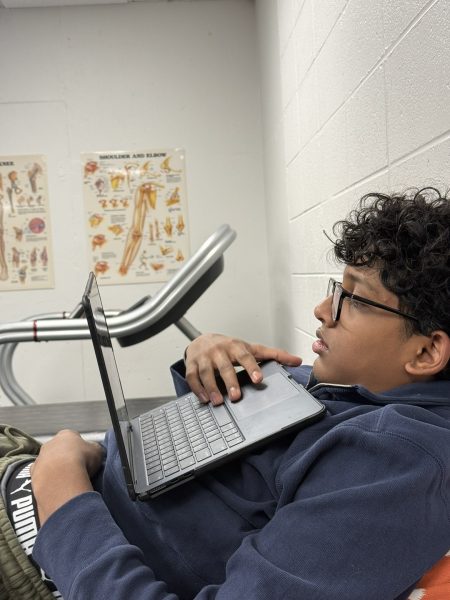
Senior and varsity tennis player Arjun Sawardekar described how he visits the office during the school day, even when he isn’t injured. “A lot of my friends go there during the day to do stretching and [physical therapy], so I come and hang out there. It's a nice, quiet space during the day, and I have a lot of fun being there with friends,” Arjun said.
The office has become an essential part of student life at Latin; the trainers not only help athletes return and recover from injury but also offer consistent comfort, guidance, and care throughout each and every athletic career.
“We can help with more than just musculoskeletal issues,” Mr. Adrahtas said. “If we can't help directly, we can guide you to someone who can.”