


Dear Members of the U.S. Senate,
I write to you after learning that the House just voted to pass H.J. Resolution 140, which would remove a 20-year mining ban from land around the Boundary Waters Canoe Area in northern Minnesota. I’m no scientist, but I’ve read many an article on the effects of copper mining (one of the main resources abundant in the area) both in the Boundary Waters and around the world. The environmental impact of this resolution would be, frankly, disastrous.
This is a topic near and dear to my heart. It seems wrong to me that I should let this bill pass with crucial information left unconsidered. And so I want to start with a story. When I was 14, I went to a summer camp in northern Minnesota for the last time. The camp had been my mother’s as a child, then mine for six summers. This camp has a tradition of taking trips to the Boundary Waters, a group of lakes just west of Lake Superior that lie along the U.S.-Canada border.
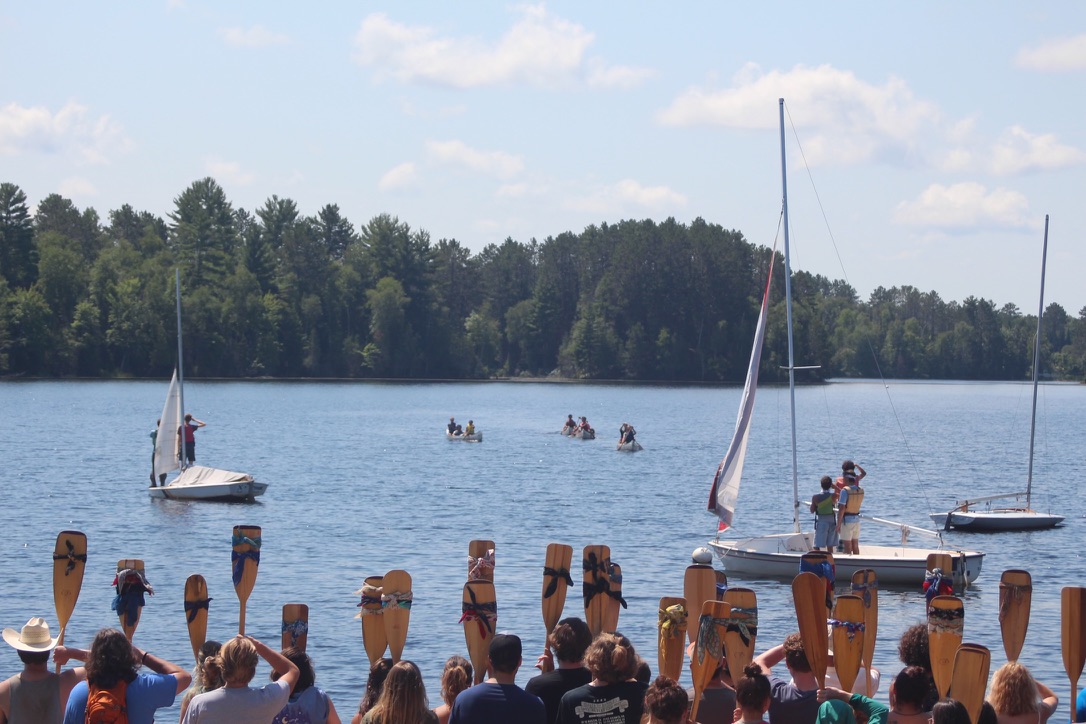
The trip, taken mostly by older campers, is a symbolic experience: 10 days traveling through the lakes, portaging across lush isthmi and camping on cliff faces rising from the deep. Just about any counselor or staff member at the camp could and would regale you with tales of their time in those waters; to weather the trip was to write one’s own chapter in the camp’s storied history. Each trip, upon completion, paints all their unique experiences, jokes, and memories on a wooden oar. The oars hang in the camp dining room, dozens total, some more faded than others, each with a story to tell.
That wall speaks to those who pass it. Young campers who have yet to gain the strength and dexterity necessary to paddle a canoe gaze in awe at the array of travels. They imagine the day they will take that trip, returning across the lake to the entire camp waiting, dead silent, on the docks, listening for the traditional song.
Sitting at the stern of that canoe, guiding its dented aluminum hull through the lapping waves, seeing the log cabin frames materialize in the distance, I was reminded of how I felt sitting on that dock my first time. How I had watched the masterful handling of those temperamental boats, heard the singing grow louder as they pulled closer, seen the sunlight glinting off the bows; I had revered those older kids.
Your move to undo this mining ban would destroy that place and those experiences. Not for me—I’ve already lived it—but for those campers who watched me return, and for those campers who will watch them return after that. I cannot put a price tag on the Boundary Waters, on its mineral wealth, or its natural beauty.
This 1.1 million acres of pure wilderness is a shared space, beloved by all who have truly taken the time to see and appreciate it. It’s a space of community, tradition, and shared identity. Native Peoples lived in the area for thousands of years, and their paintings can still be found on cliff faces across the park. My summer camp and plenty of others all enjoy this space as a means to learn, connect, and experience nature. Hundreds of animal species call it home.
Your bill would almost certainly lead to copper mining near the Boundary Waters, which would cause irreparable damage to wildlife and poison the water visitors swim in, drink, and rely on to travel the vast park.
You have been elected, and with that election, you have power. People trust you. They put their faith in you. Each decision you make affects thousands of people, if not millions. Don’t be the ones remembered for destroying this place, among the last of its kind across the country and the world. Don’t be the ones remembered for being the reason those children never got to sing the song, never got to put their oar on the wall.
You still have a chance to do what’s right. You have the power, so set the example for the next generation of politicians and changemakers. And make sure that kid gets to sing the song and put the oar up on the wall. Vote “no” on H.J. Resolution 140.
Sincerely,
Eli Silberberg





Zachary McArthur • Feb 11, 2026 at 8:21 pm
Good writing, Eli. I also grew up canoeing in the Boundary Waters, as did my mom in the 1950s and 1960s. It is a pristine wilderness that should be protected at all costs! – Mr. McArthur