

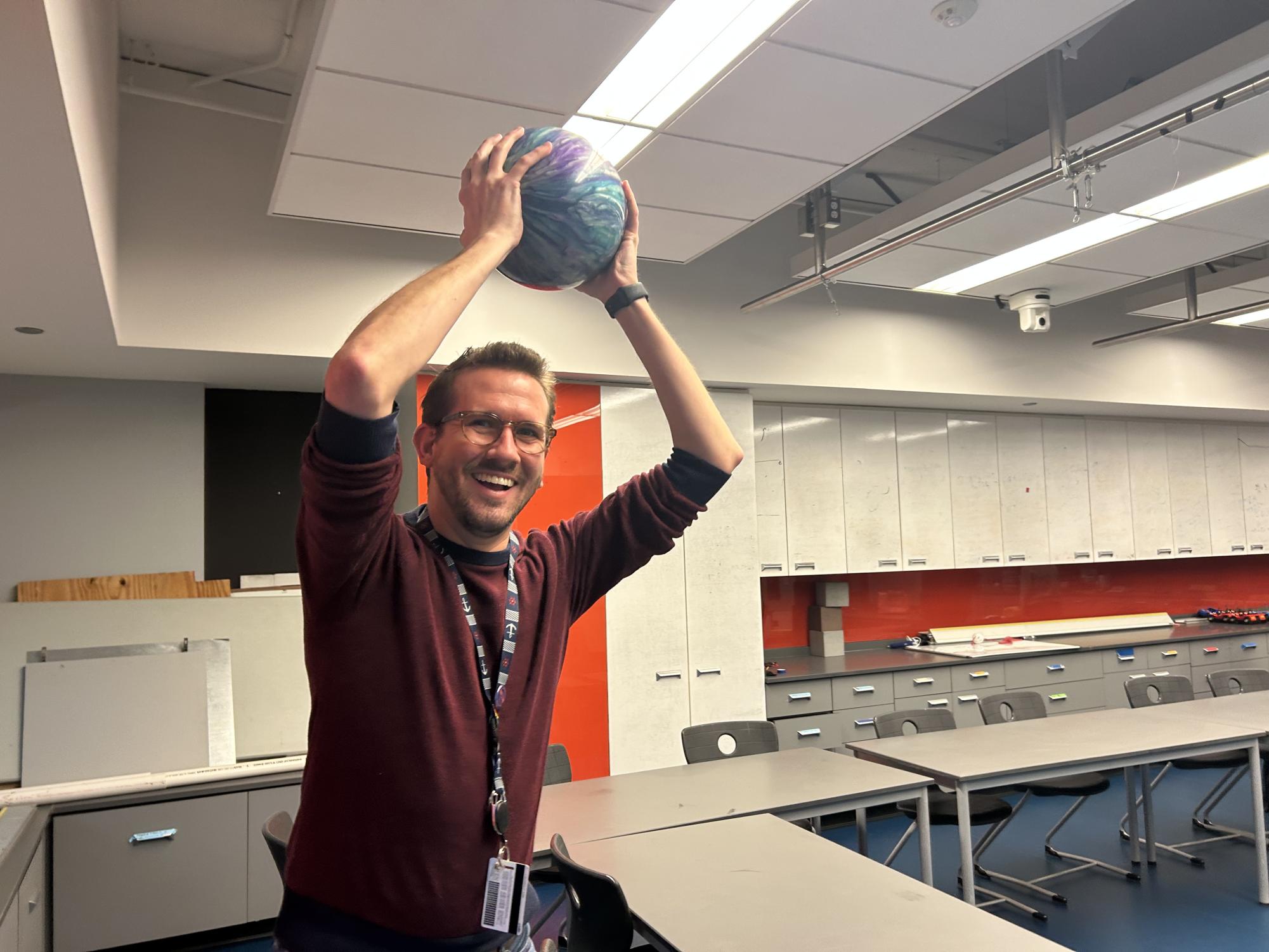

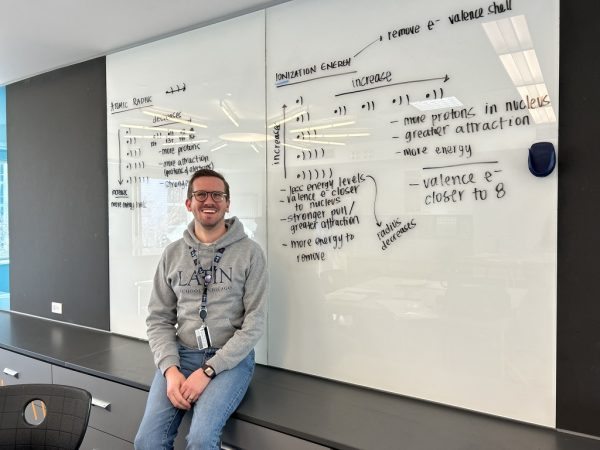
Drawings of atomic radii explode onto whiteboards in the chemistry lab. Students fire questions across the room, and Upper School science teacher Peter Peltack launches answers right back at them. Sophomore Sophia Brodsky asks, “Why does the electron want to remain with copper?” Mr. Peltack’s classroom is filled with chaos and curiosity every day that draws his students in and makes them want to engage with material.
Mr. Peltack, a chemistry and physics enthusiast, joined the Science Department this fall with an enthusiastic approach, strong organizational skills, and a couple of jokes in his pocket. He currently teaches two sections of Honors Physics and two sections of Chemistry.
One of Mr. Peltack’s Chemistry students, sophomore Sixten Hinz, said that Mr. Peltack “being supportive of [his students] is something that makes [him] a great teacher. I also like how helpful he is, especially when people have questions. He always comes over to our table, helps me for a bit, and he's always on his toes.”
Mr. Peltack’s students appreciate not only his overall approach toward navigating academics with classroom management, but the attitude he brings to class.
Sophomore Phoebe Hirsh said, “Mr. Peltack comes to class with a smile on his face and good humor, all while answering our questions and getting work done.”
Although Mr. Peltack fits the role well, he didn’t always want to be a science teacher.
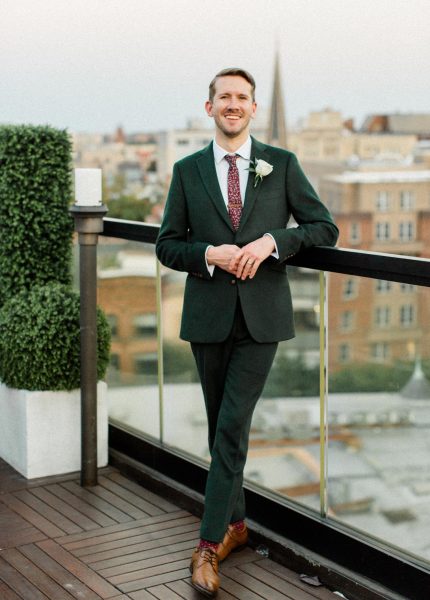
“Up until high school, I wanted to be a neurosurgeon,” Mr. Peltack said. “I was watching ‘Grey's Anatomy’ and thought, ‘This is cool—I want to do brain surgery. I thought the brain was cool, but also, I'm very organized—very type A. The intricacy was part of it; you had to be super specific in what you do. That's how I am as a human, so I thought I would be really good at this.”
Mr. Peltack’s high school opened his professional horizons. He had a non-traditional experience in rural North Carolina, as he chose to attend an “early college” high school where he took college-level classes alongside students ages 13 to 70 years old.
Reflecting on his formative years, Mr. Peltack said, “You were forced to grow up really quickly when you're in that environment. You didn't have a choice because it's either do or die. You either succeed or you return to regular high school. So I think that added pressure made it even more challenging, but I wouldn't change it for the world.”
At his school, he was not only introduced to rigorous academics but the career path he wanted to pursue. “The challenge brought me closer to wanting to teach, because it helped me realize what kind of teacher I wanted to be,” he said.
After earning his master’s in Education Policy and Leadership, Mr. Peltack began his teaching career at a public school in North Carolina, where he taught for four years before moving to Washington, D.C., where he also taught at a public high school for four years.
After those jobs, what drew Mr. Peltack to a private school was the ability to teach without worrying about the federal government's involvement in the school system. That’s why Latin’s small, tight-knit community made Mr. Peltack feel at home from the start.
“The first week, kids were leaving class and saying, ‘Thank you so much, Mr. Peltack.’ And in my mind, I'm like, ‘I'm just doing my job.’ I didn't think it was a big thing to thank someone for teaching,” Mr. Peltack said. “But then I realized, 'Oh, the students are showing up because the faculty are showing up.' And so my expectations shifted. I realized I was expected to show up every day and give my best for the kids, because they were doing the same thing for me.”
Support as he integrated into the Latin community, whether in the classroom or from other faculty members, significantly aided Mr. Peltack’s journey. Each new teacher at Latin receives a faculty mentor to help guide them through their first year. Mr. Peltack’s mentor, Upper School French teacher Julie Cousin, enjoys her time working with him.
“Peter is always a good person to be around and has a genuine passion for teaching,” Mme. Cousin said. “I probably would have liked physics if he had been my teacher, as he is very open-minded, embrace[s] the space, and has a positive attitude.”
Mr. Peltack is enthusiastic about many parts of teaching, but his favorite part is “that vital moment where kids struggle with some of the concepts, but next week, or the week after, there's this lightbulb.” Mr. Peltack said, “When everything starts piecing together, that's where I'm like, ‘I've done work to teach you, but you've done the work for the understanding and making those connections.’”
Mr. Peltack’s ultimate aim in every discussion with students is to create a sense of support and collaboration that fills his classroom.
“I really want my students, and anyone who comes through my classroom, to understand that you're a human first,” he said. “Academics will come second. So, [to] the teachers reading this, you're human. Give yourself a little grace, give your students grace. We all need it these days.”




Deborah Linder • Jan 17, 2026 at 10:18 am
Thank you for sharing this story. Mr. Peltack is the best.