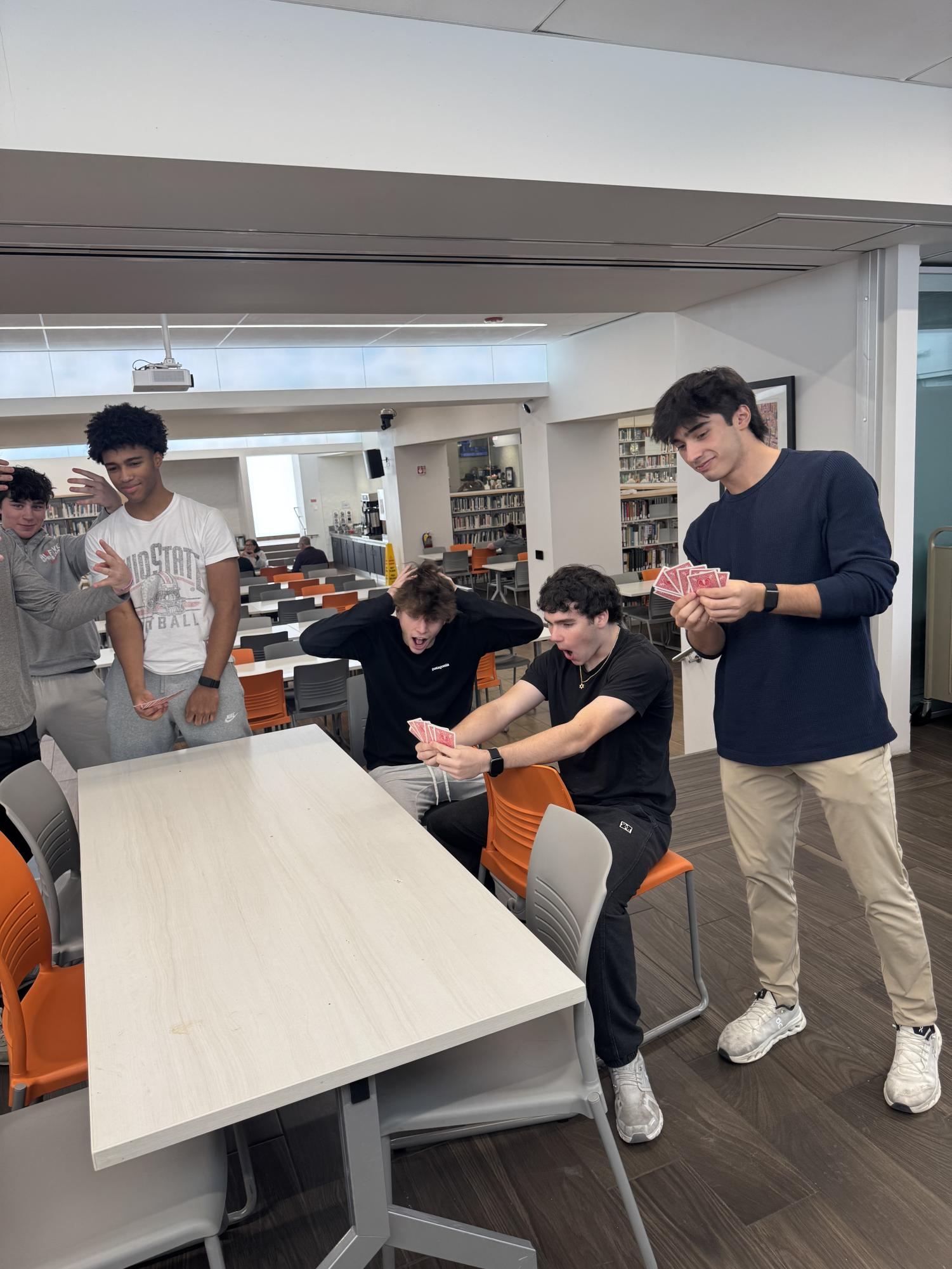
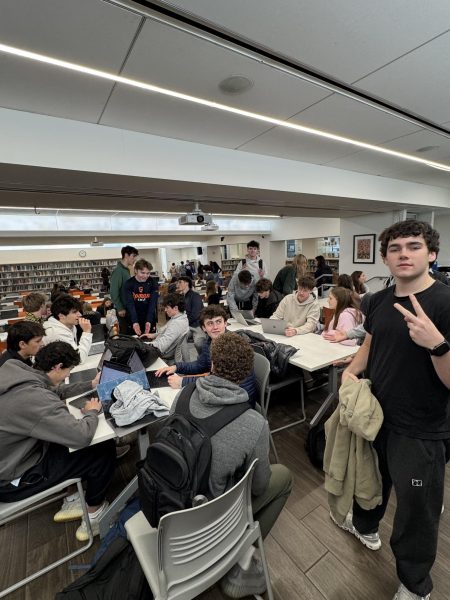
Students lean in, shout across tables, and erupt in laughter. The Learning Commons buzzes with energy and is alive with camaraderie that no app could ever recreate. Welcome to lunch after Latin’s phone ban.
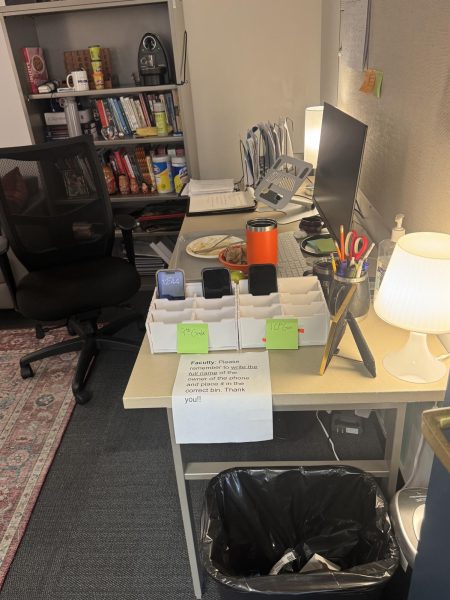
It has been three months since the Upper School administration decided to ban phones during school hours in an effort to enhance the community and reduce student anxiety.
The results speak for themselves. Junior Stofer Stineman said, “It has made school feel more social and more positive. Instead of being on my phone during lunch or free periods, I find myself socializing much more and also doing things like playing cards.”
Upper School Dean Lenny Goldman had hoped for stories like Stofer’s when he helped create this new rule. Mr. Goldman said one of his main goals was to “continue to promote and revitalize our sense of community and belonging here at Latin.”
While the phone ban has significantly helped community building, it is also intended to support teen mental health—a major reason the policy was implemented.
Upper School Counselor Anneliese Kranz said, “From the research, we do know that screen time has a negative impact on mental health. Less screen time, then, should have positive effects on the mental health of our students.”
This effect has been particularly noticeable throughout the senior class. In a very stressful time filled with college applications, maintaining grades, and meeting all sorts of deadlines, some students are saying that not having a phone to distract them is helping them focus.
Senior Wyatt Greenberg said, “The phone ban has helped me focus in and outside of the classroom because it has limited distractions. This has especially helped me with getting my homework done on time and studying.”
While the ban has definitely helped the students stay on task, teachers have also felt the effects of the phone ban, many of whom strongly in favor of the new policy.
Upper School history teacher Matt June noted that since the phone ban was implemented, “it does seem like students are more attentive.”
Mr. Goldman echoed this sentiment. “[In past years], the five minutes before a class starts, I remember always walking in [and] there would be two to five kids in class, and no one was talking—everyone would be on their phones,” he said. “And now to walk into a class and have a casual conversation, I think there has been a noticeable short-term impact.”
However, despite the praise for the phone ban, many students have struggled to adapt.
Senior Thomas McLaughlin said, “The hardest part has probably been knowing where to go during the day. Usually after class, I’d pull my phone out to check RomanNet, but now I cannot [do this] as conveniently.” This grievance has been shared by every student interviewed for this story.
Similar to Thomas, senior Mitchell Leavitt said he has struggled to keep track of his schedule without easy access to his phone.
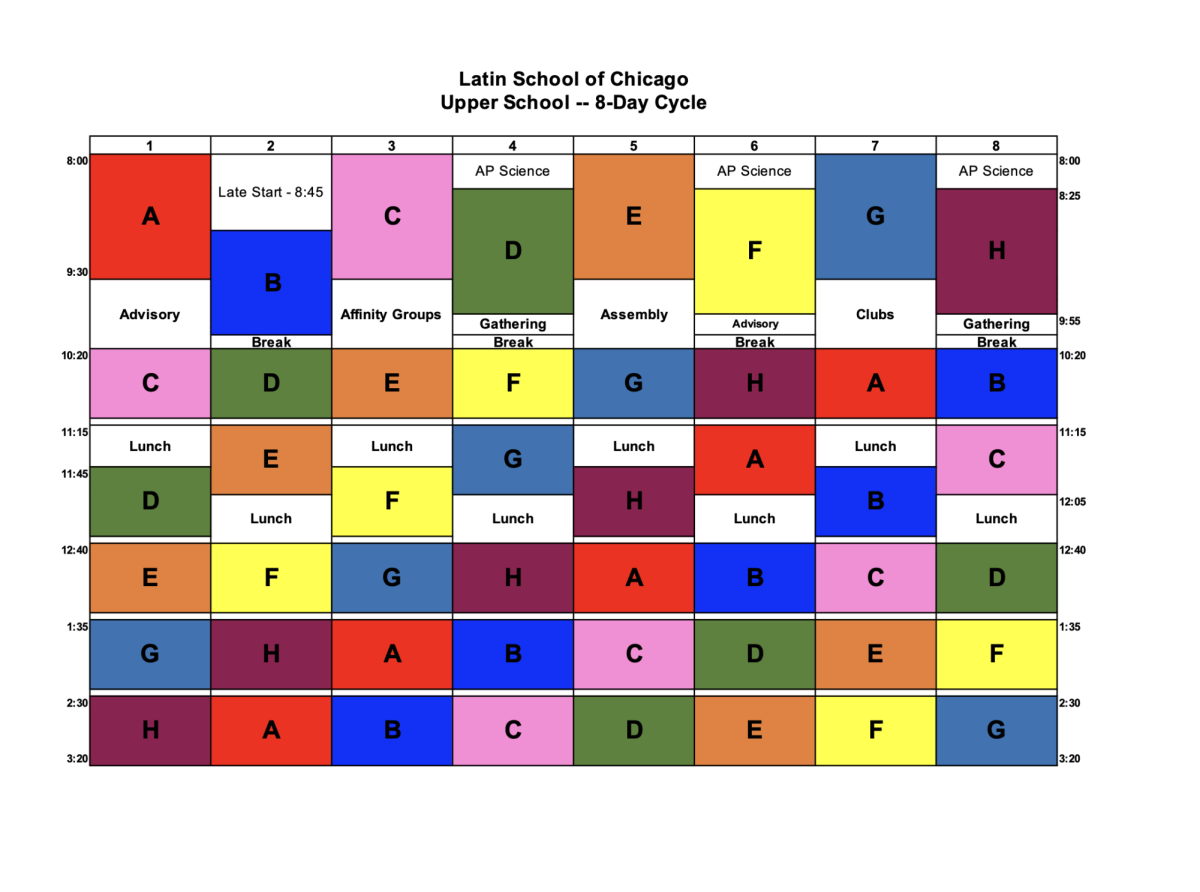
“I have missed multiple classes this year because I cannot look at my schedule,” Mitchell said. “I have a printout of my schedule, but it is not always obvious which day is which. I have had to have multiple meetings with teachers because I miss important content.”
Along with the inconvenient schedule access, students and teachers alike are finding flaws with the new system every day.
Dr. June said, “It's the screen, not the phone. You can mirror your phone on your laptop, [and] you can download and/or play games, like PGA golf or drift racing, on your laptop. If you are not on Latin Auth, you can also get on social media and whatever else you want to do.”
In accordance with Dr. June’s comments, Thomas said, “I feel like the ban hasn’t improved or made anything worse—people just use computers instead.”
Now there is one overriding question left for the future: Will the phone ban be brought back next year?
Mr Goldman said , “It was always explicit that [Upper School Director Nick Baer] said this policy would be fluid and that we would be able to adapt.” Even with the option to change the policy, Mr Goldman said, “I would keep [the policy] the same because I think that we are moving in the right direction.”
Contrary to Mr. Goldman’s opinion, many students have new ideas on how they would tweak the current phone policy.
Stofer said, “I think that the policy would be better if there were certain places for phones to be around, such as during a free block.”
Echoing Stofer’s thoughts, Thomas said, “I would just make [the policy] no phones in classrooms but enforce it strictly.”
While debate continues in the Upper School over whether the phone ban should remain, one thing is clear: Both students and teachers feel the policy has helped them connect more with their community, both inside and outside the classroom.
“Outside of the classroom, I think [the phone ban] has been a big benefit,” Dr. June said. “Nothing was weirder than seeing a bunch of [students] ‘socializing' around a table in the LC, never looking up from their phones. While that doesn’t mean you should be playing ‘water dice’ in the LC, it is always nice to see some old school hanging out happening.”