



When ICE agents descended on Chicago this fall, interrogating, assaulting, and arresting both non-citizens and citizens alike, Latin parent Alexandra Block headed to her office. The papers across her desk carry more than words; they each hold pleas from Chicagoans desperate for change—in their communities, the law, and their lives. Through a partnership with the American Civil Liberties Union (ACLU) of Illinois, Ms. Block strives to turn those people’s dreams into a reality.
As the Director of Criminal Legal Systems and Policing Project for the ACLU of Illinois, Ms. Block advocates for human and civil rights in and out of court, leading her team of 21 attorneys to protect civil liberties. The ACLU—a nationwide organization with affiliates in all 50 states—covers many issues, but Ms. Block and her team are currently combating Operation Midway Blitz, the Trump administration’s mass ICE presence and arrests in Chicago.
Ms. Block’s journey to protecting civil rights began before she joined forces with the ACLU. “I started as an employment lawyer, helping people who were discriminated against in their jobs,” she said. “Then I branched out to doing a lot of different kinds of litigation, including working with the ACLU and working on government transparency issues.”
Working at the ACLU allowed Ms. Block to bridge her legal experience and passion for public service. “I guess I came [to] this current job through a little bit of a circuitous route, both through learning litigation skills in the private practice of law, and also doing volunteer and pro bono work on the issues that I really cared about,” she said. “And then a few years ago, I got the chance to bring both of those things together and be a litigator for criminal legal system reform at the ACLU, which is basically a dream job, so I jumped at the chance.”
When the government announced Operation Midway Blitz, Ms. Block knew she had to get to work. “[Operation Midway Blitz] was not a surprise, because President Trump had been saying since before the election that he planned to ramp up immigration enforcement, and he’s particularly planned to target blue cities,” Ms. Block said. “He had done it in LA. He threatened to do it in Portland, so when he did the same thing in Chicago, it wasn’t a shock. Seeing how these situations have played out in other cities has helped us strategize.”
Ms. Block and her team had been getting ready for a potential immigration crackdown for a while. “We, and a lot of other community organizations that we work with, have been doing ‘Know Your Rights’ training [sessions] for many months, even before Operation Midway Blitz started,” she said. “So we had done a lot of work ahead of time to prepare on all of those fronts, prepare potential litigation, prepare advocacy strategies, [and] prepare our community engagement.”
With her relevant legal experience, Ms. Block took on a crucial role in court cases as Midway Blitz began. “I work on issues regarding police reform in Chicago and throughout the state,” she said. “And because I have a background in policing and criminal justice issues, I have also been working on some of the strategy and some of the litigation from people who have been hurt by federal agents recently, during the Midway Blitz.”
Ms. Block’s efforts have led to meaningful legislation. “[A few weeks ago] we had a really good week in court,” she said. “Judge [Sara] Ellis granted a preliminary injunction, which is a temporary ruling that prohibits the federal agents from doing some of the horrible things that they’ve been doing to the rapid response teams and protesters who have shown up around the city.”
The aggressions that Ms. Block spoke of include the National Guard violently retaliating against peaceful protests. The ACLU took legal action to protect these protesters, leading to Judge Ellis’ injunction, which “stops some of the worst of the abuses against protesters and clergy both around the city, and at the Broadview Detention facility in the Western suburbs,” Ms. Block said.
The Federal ICE Detention Center in Broadview, Illinois, as Ms. Block alluded to, has detained immigrants arrested during Operation Midway Blitz and kept them in “absolutely disgusting and filthy and inhumane” conditions. “There were 100 people to a cell with overflowing toilets, moldy food, [and] not enough water,” Ms. Block said. “Conditions that you would never wish on another human being.”
Director of Academic Initiatives and Upper School history teacher Ingrid Dorer-Fitzpatrick, who teaches Advanced Topics: Psychology and International Human Rights Law, also acknowledged the inhumanity of these detainments. “From a standpoint of human rights, you could look at violations left and right,” she said. “[These are] asylum seekers; it’s a violation of rights that people have as citizens.”
To protect the detainees’ human rights, Ms. Block’s team at the ACLU argued for ICE agents to improve Broadview’s conditions. “Our team worked with some other organizations and a law firm to get a temporary restraining order from Judge [Robert] Gettleman, who heard the case about the conditions that people are being held in in the Broadview,” Ms. Block said.
Judge Gettleman’s ruling in Moreno Gonzalez v. Noem required federal agents to clean the Broadview facilities at least twice a day, distribute soap and toothbrushes to the detainees, permit them to shower, and provide them with a mattress to sleep on. These major steps toward more humane conditions would not have occurred without Ms. Block’s leadership at the ACLU.
This success hit close to home for Ms. Block, as she is a close friend of the main litigant in Moreno Gonzalez v. Noem. “The first named plaintiff, his name is Pablo, Pablo Moreno Gonzalez,” she said. “He is the husband of a longtime activist who has worked with the ACLU on some of my cases. We’ve known Pablo and his family for a really long time. The fact that he was picked up was heartbreaking and terrifying, but he was let out [on Nov. 7] and got to spend the weekend with his family.”
After Mr. Gonzalez’s Oct. 29 arrest, ICE kept him in the Broadview facility, prompting him to take legal action against its inhumane conditions. He has lived in the U.S. for 35 years, and Ms. Block hopes he can continue to do so. “I don’t know if he will be allowed to stay in the country,” she said. “I think he has good reasons why he should be allowed to stay, and he has a good immigration lawyer now.”
Ms. Block feels as though personal stories like Gonzalez’s help people remember the detainees’ humanity. “Everyone who’s arrested is a worker, a parent, or a child of someone,” she said. “I think that’s really important for people to keep in mind.”
Ms. Dorer explained how ignoring immigrants’ humanity and rights enables their mistreatment—just as Ms. Block fears. “This is where the psychology piece comes in,” Ms. Dorer said: “If you’re giving [agents] the right to sort of ignore some of the basic rights that people have when it comes to being stopped, searched, asked for identification, [then] we’ve made [the immigration issue] worse. We’ve made it substantially worse, and the people that are [arresting immigrants] see themselves as doing the right thing, because they’ve been told, ‘You’re here to bring criminals out of our country.’”
Ms. Block agrees that ICE’s rampage does not align with Chicago’s community values. “Our city is being attacked because of who we are,” she said. “I’ve really seen a lot of people across the political spectrum coming together to say the Trump administration is not reflecting an accurate vision of who we are.”
Even in the wake of Operation Midway Blitz, Ms. Block feels hopeful about the resilience of the city. “Chicago has really pulled together in this time,” she said. “One of the mixed blessings about what the Trump administration is doing right now is that we’ve had many people apply to work with us [at the ACLU]. We’ve had so many more people apply to volunteer with us, so many more just being engaged with our events. The level of engagement by community members, and especially young people, has been really, you know, amazing to see.”
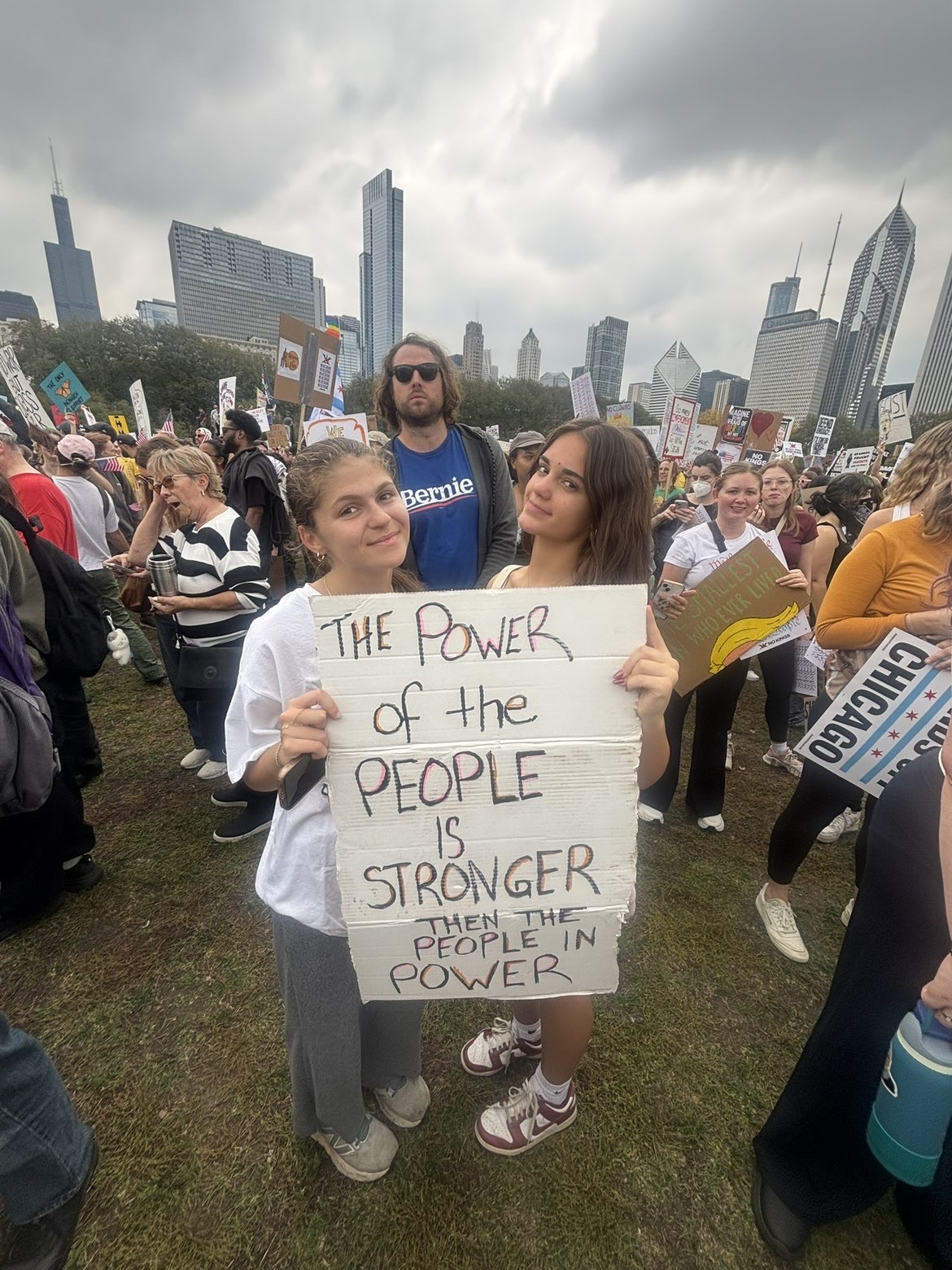
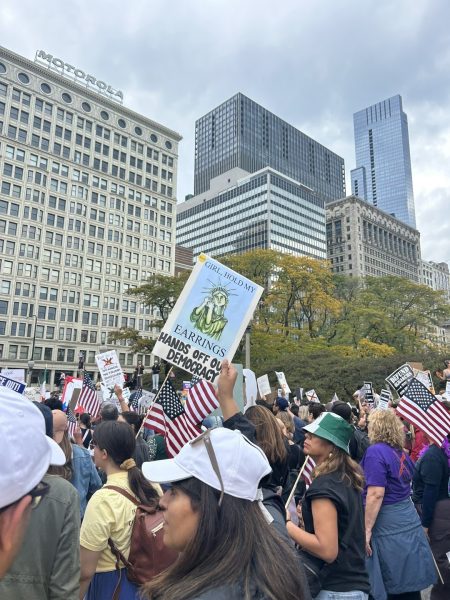
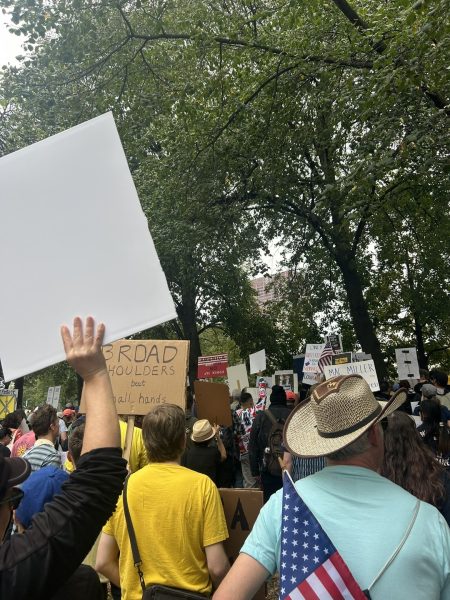
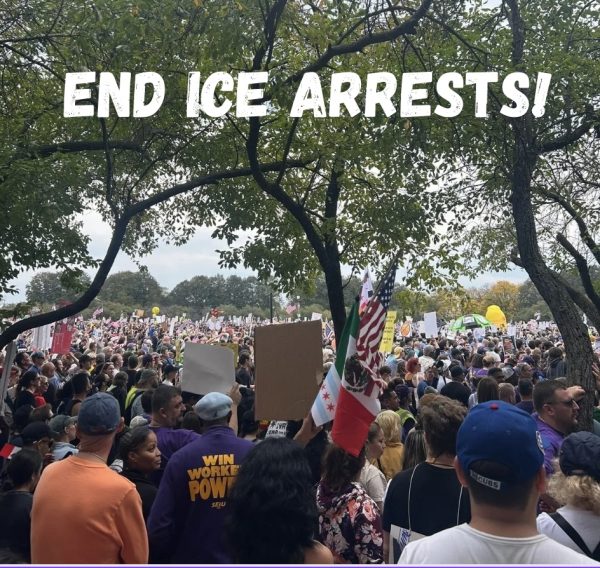
One way Ms. Block saw involvement was at the No Kings Day rally on Oct. 18, where many Latin students marched, including sophomore Cecily Daly.
“I got inspired to go to the No Kings Day rally because my mom really wanted to go, and I had seen protests in other states and wanted to participate,” Cecily said. “I just walked through the streets for an hour saying the various chants and looking at the signs.“It felt really special to be able to participate in such a humongous and special event that, even though it should, doesn’t happen very often.”
From her civil rights viewpoint, Ms. Block feels as though this call to action has reflected the spirit of Chicago. “We are a vibrant, cosmopolitan, diverse city of proud neighborhoods, and that is what gives me hope,” she said. “As terrible as the situation is in Chicago now, with all of these masked agents marauding through our neighborhoods, it’s really, I think, woken some people up. There’s nobody coming to save Chicago, except us.”



Genevieve • Dec 12, 2025 at 10:08 am
Well said, Sloane