The junior class opened their emails on Nov. 7 to find the results of their first honors English option, sparking mixed reactions. Some celebrated their success in earning the credit, while others expressed frustration and disappointment; the reactions revealed just how differently students experienced the new program.
The English Department introduced the honors track to give passionate humanities students the opportunity to earn recognition for their dedication, piloting the program with this year’s junior class. In previous years, the English Department lacked any honors programs, whereas the Math and Science Departments have long provided honors classes to highlight students’ strengths in those areas.
Upper School English Department Chair Kate Lorber-Crittenden (L-C) said, “Given that there are so many other ways for students who excel in STEM areas to show that and to have it communicated on a transcript, we wanted to provide that opportunity for students.”
Unlike the separate honors classes in STEM departments, the English program does not offer honors courses independent of the normal English 11 offerings. Instead, all students, regardless of aptitude or interest, remain in the same courses, but those who wish to pursue honors credit must complete additional work. The department chose this approach to prioritize accessibility, allowing all students to attempt to earn credit.
Upper School English teacher Molly Lemieux said, “It was important to us to not reintroduce tracking into our classes and to make sure that we maintained fully mixed-level classes.” “Tracking” refers to grouping students into different classes based on academic ability or achievement level.
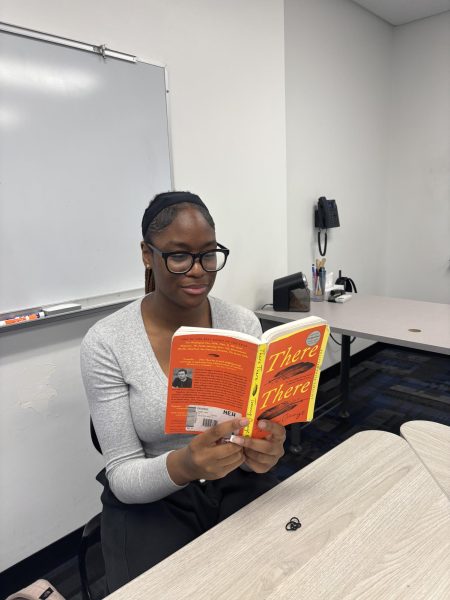
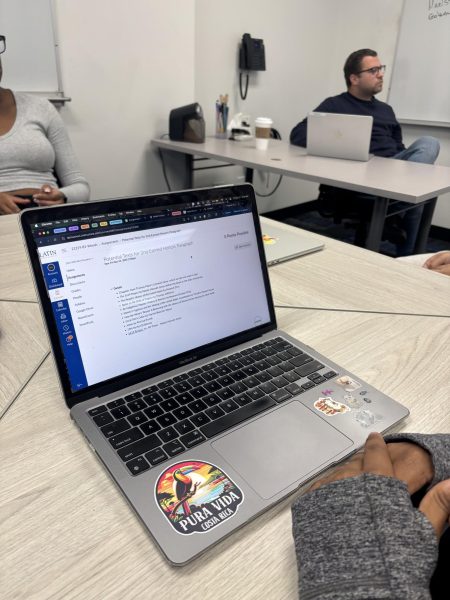
To qualify for honors, the English Department asks students to write an additional 500- to 800-word piece for every major assessment in their standard English classes, where they must synthesize their ideas using an outside text of their choosing. The department added a new strand to the rubric called Independent Expanded Thinking, which will be used to grade these honors assignments.
As the standard’s name would suggest, the department designed the system to emphasize independence. Teachers gave students feedback on the draft of their first submission but will not on attempts in the future.
“The independent piece is really important to us in terms of what honors work looks like,” Ms. L-C said. “The assumption is that if you’re going to be in the honors level, you’re not using a tutor for it, that you can do that work on your own.”
However, these rigorous standards have raised student anxieties. Junior Miles Baker said, “I have heard a lot of negative feedback about the honors option, mainly regarding its design. I think the ability to have more honors classes is a big positive for many people, but the way the English Department has approached it is what’s causing people to be upset.”
Some of the major concerns from students center on the strict grading criteria and lack of outside guidance involved with the new system. In addition to the high level of independence demanded, to remain eligible for the honors track, students must consistently earn 4’s (“fully meets”). Only two 3’s (“mostly meets”) are allowed in the Independent Expanded Thinking strand.
“The fact that if you get a 2 (“partially meets”) at all, ‘you’re done’ has scared a lot of students, and the inability to meet with your teachers or the Writing Center about the honors options has only furthered this fear,” Miles said.
Some students maintain that other honors programs, such as those in math and science, do not require the same level of sustained effort.
Junior Genevieve Ramsey said, “I think that having the honors title in the math and science classes may be objectively easier, because you could have a C- in the class and have it still be considered ‘honors’ because you’re in the class.”
However, English teachers created the program to require consistent high-level work throughout the entirety of the year.
Ms. L-C said, “If we’re going to assign that honors bump on the transcript component, then [we are] making sure that students are fully buying in and participating in that endeavor all semester.” She added that if a student receives a “partially meets” in an honors option, then “that usually is an indication that they just kind of [dropped] the ball on the assignment.”
While some students criticize the intense standards of the program, others embrace the demanding curriculum.
“Students do benefit [from the honors option] since it builds stronger writing, analysis, and independence skills,” junior Landry Silvers said. “We probably should have had an honors option earlier, because it gives motivated students a chance to push themselves.”
Landry also appreciates the way the English honors format allows more creative liberties.
“Compared to math and science, the English honors option is more flexible and project-based, while the others are more rigid and content-heavy,” Landry said.
Building on Landry’s point about flexibility, the concept behind the English honors option was to celebrate students with a talent for English and give them the chance to showcase their skills rather than simply following a rigid curriculum.
According to Ms. Lemieux, the honors option is “supposed to be for students who are honestly not doing this for the grade, but doing it because they love English.”
Still, English teachers also acknowledge the challenges of launching a new program.
“We want this to be an opportunity that students feel confident about, and, you know, that’s never going to happen the first year,” Ms. Lemieux said.
The English Department will revise the honors option for next year, keeping student feedback in mind.
“Our hope is to process all of this this year, and see how honors [goes],” Ms. LC said. “We are trying to do our best to establish an earned honors program that we feel really strongly about.”