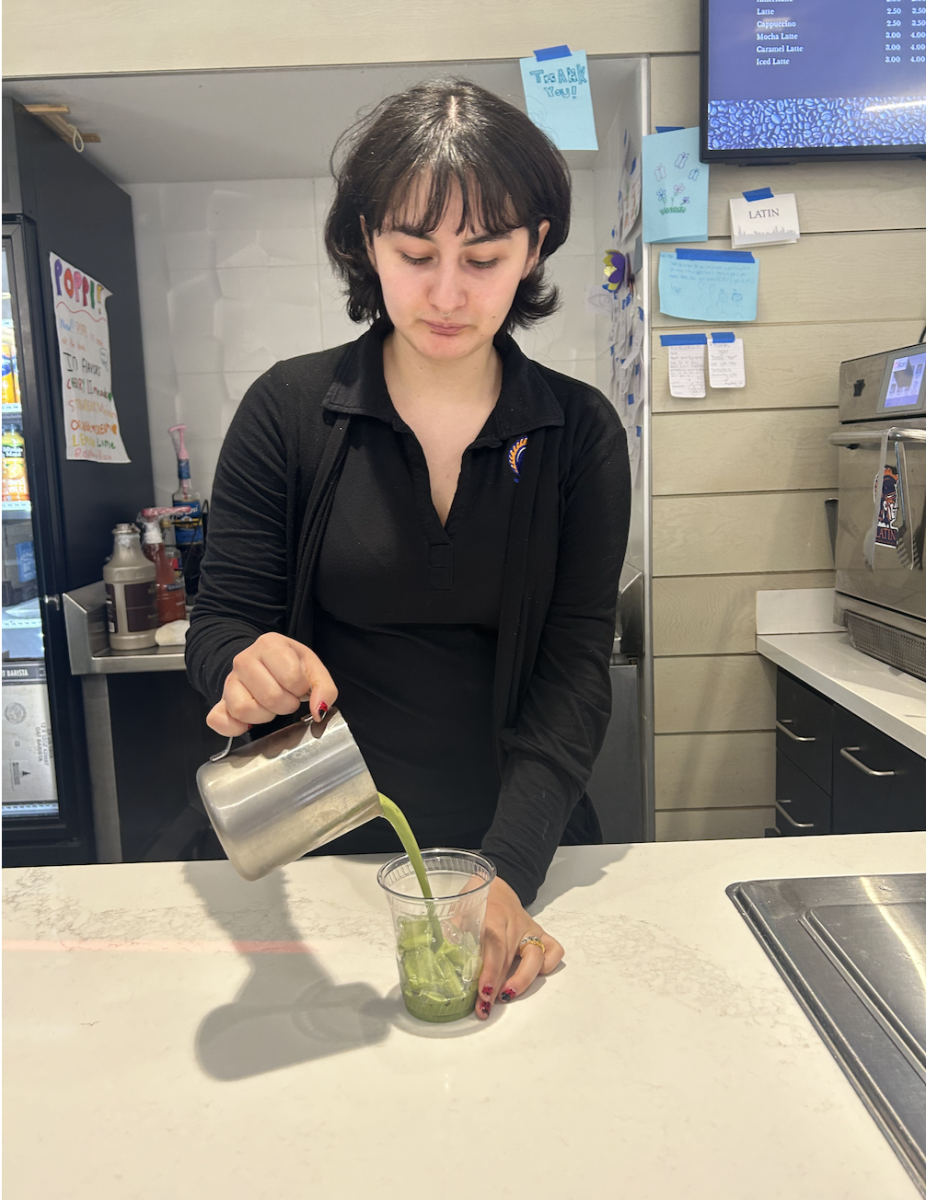
From farm-fresh dishes at lunch to composting bins and biodegradable packaging at the kiosk, Handcut Foods is rolling out new sustainability initiatives this fall alongside Green Club to make dining at Latin more eco-friendly.
These projects are part of Latin’s larger effort to integrate sustainability into the everyday dining experience. Handcut Foods aims to reduce waste through small, progressive steps that do not disrupt students’ established dining routines by incorporating new student-driven ideas and menu feedback.
Morgan Smith, Director of Dining Services at Handcut Foods, has witnessed firsthand the evolution of Latin’s dining experience. After using last year’s menu feedback to see which meals produced the most leftovers and reviewing composting trials, Ms. Smith and her team focused on reducing food waste by optimizing their dish selection. “The amount of food we had left over was a very clear indication of what didn’t go well,” Ms. Smith said.
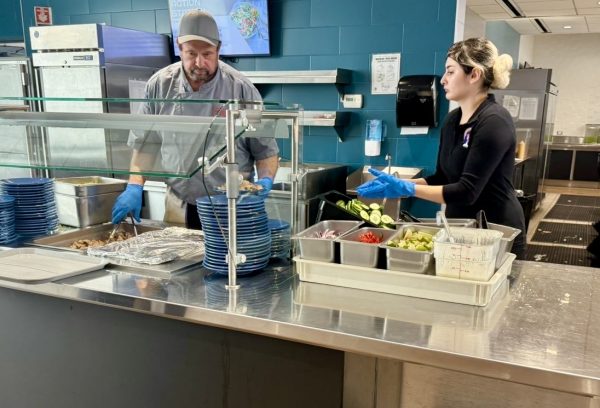
Reducing food waste has been a key priority in the kitchen. Ms. Smith relies on head chef Chris Hernandez, who has navigated Latin’s food supply and demand for eight years, to manage food portions. “He gauges very well how much we’re going to need for school. I might look at something and say, ‘We’ll need a massive amount,’ but he knows when to scale it back,” Ms. Smith said.
Handcut Foods also relies on direct student feedback to determine where improvements are needed. “You guys are very vocal—which I fully appreciate—about letting us know, like, ‘This is trash,’ or ‘We didn’t like this,’ or ‘We should do this,’” Ms. Smith said. By taking student input and observing what food is eaten and what’s not, the cafeteria can adjust proportions and repurpose unused food into new dishes. Last year, they began using leftover beef to create new dishes, such as rice and beef bowls and nachos; they switched up their sauces to add variety to these repurposed meals.
Beyond menu changes, Handcut Foods has also begun collaborating with Green Club and expanding its sustainability interest to the Lower School by launching a new composting initiative.
This project aims to inspire younger students to learn about managing food waste responsibly, while the Green Club strives to lead by example. Senior Miles Stagman, a co-head of Green Club, said that the composting bins were introduced first, “starting with the fourth graders, and then will slowly be incorporated into the rest of the Lower School.” Lower School Director Bliss Tobin proved particularly passionate about composting, giving the Green Club a perfect location to implement its first composting project. “We decided to start with the most mature grade in the Lower School, the fourth graders, before expanding it further,” Miles said.
The Green Club has also proposed new ideas for Handcut Foods to consider, starting with making the kiosk more eco-friendly. “We’re super excited that some of our Green Club members are leading an initiative to replace plastic wrap at the kiosk with a more sustainable beeswax alternative,” Miles said.
Students have already started to notice the progress in dining this year. As Ms. Smith noted, Handcut Foods sees improving meal quality as a form of waste reduction, which simultaneously presents students with more food options they enjoy. “Lunch used to be more hit or miss. Now it feels like they’ve got rid of some of the misses,” junior Paulo Valenciana said. “They’ve been more intentional with their item selection.”
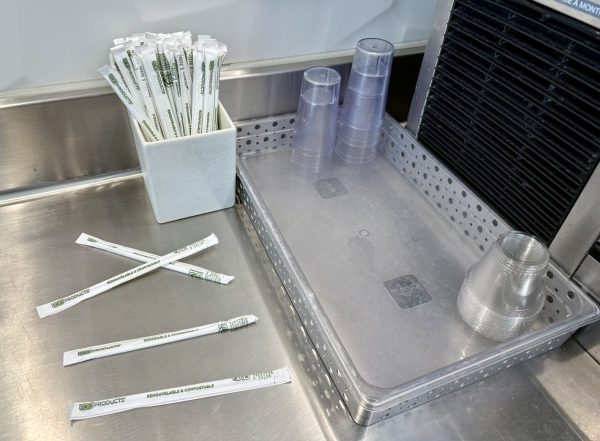
Aside from the food itself, many students appreciate that sustainability efforts don’t complicate lunchtime. Composting bins and biodegradable utensils have blended in seamlessly into their daily routines, underscoring Handcut Foods and Green Club’s goal to change the culture around food and sustainability at Latin. “Being sustainable doesn’t feel like extra work anymore; the staff has made it so easy by putting the effort in for us,” senior Taylor Mitchell said.